
PREMIUM B2B METALLURGY
High-Performance Hastelloy Pipe & Tube Manufacturer
Global industrial supplier of ultra-corrosion resistant seamless nickel alloys. Fully certified to ASTM B622, serving extreme processing environments worldwide.
Advanced Metallurgical Infrastructure: What is Hastelloy Pipe?
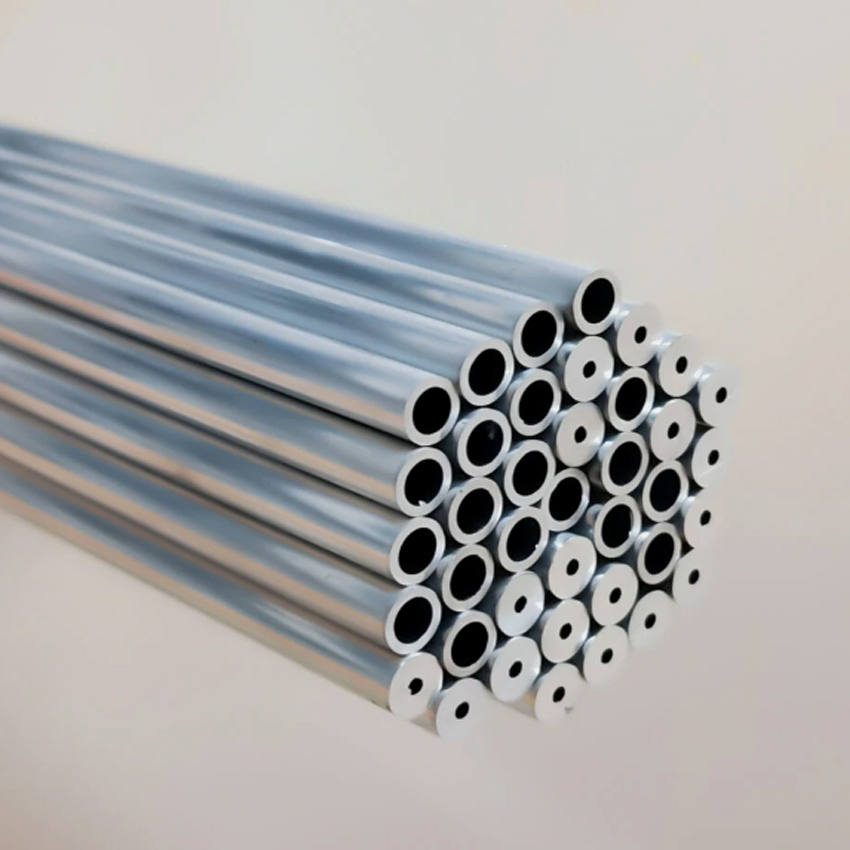
Hastelloy pipe represents the absolute pinnacle of high-performance nickel-based alloy systems engineered specifically to withstand extreme chemical devastation, high-temperature thermal stress, and oxidative or reducing media. Developed as solid-solution strengthened or precipitation-hardened matrix layouts, these superalloys are strategically fortified with heavy weight percentages of chromium, molybdenum, tungsten, and iron. This intricate elemental equilibrium creates a pipe capable of forming an instantaneous, highly stable passive surface oxide barrier when exposed to aggressive industrial chemical vectors.
As a premier global manufacturer situated in the advanced industrial zone of Songyang, China, our infrastructure specializes in translating raw metallurgical integrity into high-spec ASTM B622 seamless pipes. Traditional 300-series austenitic stainless steels and conventional duplex configurations consistently fail when exposed to high-velocity chloride streams, hot mineral acids, or intense cyclical thermal shifts. Our custom-melted, vacuum-induction-melted (VIM) and electroslag-remelted (ESR) Hastelloy alloy pipes bridge this operational gap. They provide deep material reliability, near-zero corrosion rates, and micro-dimensional precision across critical processing circuits.
Our production protocols isolate the critical structural dynamics of the alloy family. The C-family variants utilize a delicate interplay of nickel, chromium, and molybdenum to maximize resistance across shifting oxidizing and reducing environments. Conversely, the B-family focuses heavily on localized molybdenum fortification to create an almost impervious barrier against hydrochlorination streams and hot reducing hydrochloric acid solutions. Every single batch generated undergoes comprehensive destructive and non-destructive examination (NDE) matrix routines to ensure 100% downstream field survival.
Why Engineers Mandate Hastelloy Over Traditional Stainless Steels
Under conditions of elevated temperature and heavy chemical concentration, standard austenitic materials experience rapid crystalline degradation known as Stress Corrosion Cracking (SCC). The presence of chlorine icons or trace halides accelerates localized galvanic cells within grains, leading to catastrophic piping failure within days. Hastelloy pipes utilize a dense nickel base matrix that fundamentally resists halide-induced stress cracking propagation. The strategic inclusion of high-concentration molybdenum directly blocks the initiation of pitting phenomena, sustaining systemic structural cohesion in environments where total failure is the baseline expectation.
Global Engineering Standards & Manufacturing Compliance Mandates
To operate inside high-risk environments such as global aerospace arrays, off-shore oil platforms, nuclear energy generation blocks, and advanced chemical reactors, piping compliance cannot be compromised. Our manufacturing infrastructure aligns with strict international standards, ensuring that every piece of Hastelloy pipe delivered maintains perfect compositional alignment, precise wall configurations, and complete traceable documentation. The primary technical roadmap utilized throughout our mill is ASTM B622, which governs seamless nickel-molybdenum-chromium alloy piping and tubing profiles.
This standard governs severe quality metrics, including exact hydro-testing bounds, specific ultrasonic grain examinations, and tight physical tolerance fields. We complement this specification with individual customer criteria to achieve custom inner-diameter smooth executions suitable for micro-fluidic chemical injection paths. Below is an exhaustive summary of the general technical parameters across our primary production lines.
| Technical Attribute | ASTM B622 Standard Manufacturing Parameters | Enhanced Custom Mill Options Available |
|---|---|---|
| Manufacturing Standards | ASTM B622, ASME SB622, ASTM B619, ASTM B626 | DIN 17751, ISO 6207, EN 10204 3.1 & 3.2 Certification |
| Outside Diameter Bounds | 6.00 mm minimum to 457.20 mm maximum | Micro-capillary profiles down to 1.5 mm OD upon special order |
| Wall Thickness Spectrum | 1.00 mm up to 65.00 mm (Full Schedule Range) | Ultra heavy-wall custom cold boring up to 85 mm thickness |
| Continuous Length Bounds | Standard random segments (5-7m) or double random (11-13m) | Straightened continuous lengths up to 18.00 meters |
| Primary Grade Matrix | Hastelloy C276, C22, C4, B2, B3, C2000 | Hastelloy X, G-30, G-35, Hybrid custom elemental allocations |
| End Finish Preparations | Plain Square Cut Ends (PE), Beveled Welding Ends (BE) | Precision threaded male/female joints, ASME B1.20.1 NPT |
| Non-Destructive Testing | Hydrostatic (up to 100 MPa), Eddy Current, Ultrasonic | 100% Radiography (RT), Dye Penetrant (DP), Helium Leak Testing |
Granular Breakdown of Available Hastelloy Pipe Grades
Every industrial chemical reaction has its own unique corrosive properties. A plant handling highly oxidized chlorine streams requires a significantly different elemental structure than an extraction facility processing raw reducing sulfuric or phosphoric solutions. To ensure perfect material selection, we provide detailed technical insights into each of the six primary Hastelloy pipe families produced inside our manufacturing facilities.
Alloy C-276
The universal industrial standard for severe environmental defense. Features a robust nickel-molybdenum-chromium matrix with a strong tungsten addition. Excels at managing wet chlorine gas, hypochlorite streams, chlorine dioxide processing, and hot ferric/cupric chloride vectors. Widely deployed in flue gas desulfurization (FGD) scrubbers and severe petrochemical downhole execution streams.
Alloy 22
Engineered with a higher chromium content relative to C276 to provide enhanced protection within aggressively oxidizing aqueous environments. Demonstrates excellent resistance to mixed acid lines containing highly reactive nitric concentrations, localized pitting cells, and intergranular heat-affected zone weld degradation. Ideal for pharmaceutical processing arrays.
Alloy C-4
Designed for high thermal stability. The unique structural composition suppresses grain-boundary precipitation within vital heat-affected zones during welding operations. This allows the alloy to maintain its corrosion resistance even during continuous exposure to temperatures between 650°C and 1040°C. Frequently selected for aggressive chemical distillation apparatus.
Alloy C-2000
A highly versatile alloy layout formed by adding precise amounts of copper to a nickel-chromium-molybdenum core. This unique chemistry enables reliable multi-process execution in plants with shifting, unpredictable, or highly dynamic chemical profiles. It simultaneously resists severe reducing and strongly oxidizing environments.
Alloy B-2
A specialized reducing-acid alloy system featuring a high concentration of molybdenum combined with minimal chromium. Provides complete, uncompromised structural resistance against hydrochloric acid across all concentrations and thermal levels. Excellent performance within pure hydrogen chloride gas lines. Warning: Unsuitable for any oxidizing environments.
Alloy B-3
The advanced successor to the standard B2 alloy layout. Engineered to provide significantly improved thermal stability and macrostructural ductility, while also minimizing susceptibility to intergranular cracking during fabrication. Retains peerless structural integrity when exposed to harsh hydrochloric and sulfuric chemical environments.
Microstructural Matrix & Core Elemental Classifications
The performance variance among different Hastelloy classifications depends on their precise elemental ratios. The primary differentiator is the balance between the B-series and C-series architectures. The B-series depends on high molybdenum content to resist aggressive reducing agents. The C-series uses a chromium-molybdenum balance to achieve structural adaptability across both oxidizing and reducing media. The table below provides a detailed structural breakdown.
| Element Name | Hastelloy C276 (%) | Hastelloy C22 (%) | Hastelloy B2 (%) | Hastelloy B3 (%) | Hastelloy C2000 (%) |
|---|---|---|---|---|---|
| Nickel (Ni) | Balance (~57.0) | Balance (~56.0) | Balance (~66.0) | Balance (~65.0) | Balance (~59.0) |
| Chromium (Cr) | 14.50 – 16.50 | 20.00 – 22.50 | 1.00 max | 1.50 max | 22.00 – 24.00 |
| Molybdenum (Mo) | 15.00 – 17.00 | 12.50 – 14.50 | 26.00 – 30.00 | 27.00 – 32.00 | 15.00 – 17.00 |
| Iron (Fe) | 4.00 – 7.00 | 2.00 – 6.00 | 2.00 max | 1.50 max | 3.00 max |
| Tungsten (W) | 3.00 – 4.50 | 2.50 – 3.50 | – | – | – |
| Copper (Cu) | – | – | – | 0.20 max | 1.30 – 1.90 |
| Carbon (C) | 0.010 max | 0.015 max | 0.020 max | 0.010 max | 0.010 max |
Thermodynamic Profiles & Physical Constant Behaviors
The physical characteristics of Hastelloy alloys govern their performance under high stress and thermal cycles. Parameters like localized density, precise melting ranges, structural elastic modulations, and thermal transformation values must be integrated directly into piping stress modeling software (such as CAESAR II) to ensure system reliability. The table below presents the verified physical attributes across our core production portfolio.
| Physical Constant Name | Hastelloy C276 | Hastelloy C22 | Hastelloy B2 |
|---|---|---|---|
| Density Measurement | 8.89 g/cm³ | 8.69 g/cm³ | 9.22 g/cm³ |
| Melting Range Boundary | 1370 – 1425°C | 1325 – 1370°C | 1330 – 1380°C |
| Modulus of Elasticity | 205 GPa | 205 GPa | 205 GPa |
| Poisson’s Ratio Constants | 0.32 | 0.32 | 0.31 |
| Specific Heat Capacity | 427 J/(kg·K) [at 300K] | 419 J/(kg·K) [at 300K] | 427 J/(kg·K) [at 300K] |
| Thermal Conductivity | 10.2 W/(m·K) [at 300K] | 9.1 W/(m·K) [at 300K] | 9.1 W/(m·K) [at 300K] |
| Mean Thermal Expansion | 11.00 μm/(m·K) (20-1000°C) | 12.80 μm/(m·K) (20-1000°C) | 10.40 μm/(m·K) (20-1000°C) |
Mechanical Strength Profile & Tensile Performance Thresholds
While chemical defense remains a primary asset, Hastelloy seamless pipes must also handle heavy structural stresses. High internal working pressures, vacuum draw conditions, and external structural forces require excellent yield and tensile profiles. Our systematic solution processing parameters ensure that every batch surpasses the standard mechanical minimums outlined below.
| Alloy Designation Grade | Ultimate Tensile Strength (Rm MPa) | 0.2% Offset Yield Strength (Rp0.2 MPa) | Elongation at Fracture (A5 %) | Hardness (Rockwell B Max) |
|---|---|---|---|---|
| Hastelloy C276 | 690 MPa | 283 MPa | 40% | 100 HRB |
| Hastelloy C22 | 690 MPa | 310 MPa | 50% | 100 HRB |
| Hastelloy B2 | 760 MPa | 345 MPa | 40% | 100 HRB |
| Hastelloy B3 | 760 MPa | 350 MPa | 40% | 100 HRB |
| Hastelloy C2000 | 690 MPa | 310 MPa | 45% | 100 HRB |
Strategic Evaluation: Metallurgical Advantages & Constraints
✔ Primary Operational Benefits
- Impervious to Shifting Acid Matrix Conditions: Maintains stability across transitions between oxidizing and reducing media.
- Excellent Pitting Resistance: High PREN values protect surfaces in stagnant, high-chloride marine environments.
- Advanced Thermal Stability: Resists microstructural grain-boundary precipitation during high-temperature welding cycles.
- Extended Lifecycle Economics: Reduces replacement intervals and unplanned downtime, lowering total cost of ownership over time.
✘ Strategic Engineering Challenges
- Higher Upfront Material Investment: Higher initial cost compared to common 316L stainless steel configurations.
- Rapid Strain Hardening: Requires heavy-duty tooling and rigid, high-torque equipment configurations during machining.
- Strict Interpass Thermal Management: Requires precise control of welding parameters to protect adjacent microstructural integrity.
- Specific Grade Application Matching: Selecting an incorrect grade (e.g., using B2 in oxidizing environments) can cause rapid material failure.
Complete ASTM Specialty Metals Cross-Reference Registry
To assist engineering and procurement teams in identifying alternative specifications for pressure vessels, pipe fittings, flanges, and structural components, the following table lists cross-references for various alloy grades. This mapping follows the unified ASTM Annual Book of Standards guidelines.
| Trade Name Designation | UNS Number | Seamless / Welded Pipe (ASTM) | Buttweld Fitting (ASTM) | Forged Flange (ASTM) | Forged Fittings (ASTM) | Cast Valve Standard |
|---|---|---|---|---|---|---|
| Hastelloy B | UNS N10001 | B622 / B619 | B366 WPHB | B564 Ni-Mo | B564 Ni-Mo | A494 N12MV |
| Hastelloy B-2 | UNS N10665 | B622 / B619 | B366 WPHB-2 | B564 Ni-Mo | B564 Ni-Mo | A494 N7M |
| Hastelloy B-3 | UNS N10675 | B622 / B619 | B366 WPHB-3 | B564 Ni-Mo | B564 Ni-Mo | Custom Casting |
| Hastelloy C-276 | UNS N10276 | B622 / B619 | B366 WPHC276 | B564 Low C | B564 Low C | A494 CW12MW |
| Hastelloy C-4 | UNS N06455 | B622 / B619 | B366 WPHC4 | B564 Ni-Cr-Mo | B564 Ni-Cr-Mo | A494 CW2M |
| Hastelloy C-22 | UNS N06022 | B622 / B619 | B366 WPHC22 | B564 Low C | B564 Low C | A494 CX2MW |
| Hastelloy G-3 | UNS N06985 | B622 / B619 | B366 WPHG-3 | Custom Forging | Custom Forging | Custom Casting |
| Hastelloy X | UNS N06002 | B622 / B619 | B366 WPHX | B564 Ni-Cr-Mo-Fe | B564 Ni-Cr-Mo-Fe | Custom Casting |
TECHNICAL COMPLIANCE FOOTNOTE: The codes listed in the mapping profile correspond directly with the standard ASTM Annual Book of Standards guidelines. When specifying components for project documents, ensure the proper testing identifiers are appended to the standard designation prefix:
Primary Industrial Sectors & Critical Process Deployments
Due to their reliable performance under aggressive chemical conditions and high thermal gradients, our certified Hastelloy seamless pipes are specified across several critical global industries.
Advanced Chemical Processing
Used in continuous reactor feed lines, mineral acid manufacturing, and organic chloride synthesis arrays. Provides critical material reliability when processing aggressive intermediates like formic or acetic acid compounds.
Deepwater Marine & Offshore Exploration
Specified for high-salinity downhole pipelines, sour gas transport infrastructure, and splash-zone structural piping. Resists localized attack from oxygen-depleted marine water columns.
Aerospace Propulsion Arrays
Utilized in exhaust manifold gas routing, high-stress fuel delivery lines, and high-temperature combustion housings. Maintains structural profile integrity under severe mechanical vibration and thermal cycles.
Pharmaceutical & Cleanrooms
Deployed in active pharmaceutical ingredient (API) synthesis loops. Minimizes metal ion contamination risk to preserve batch purity during processing.
You must be logged in to post a comment.