
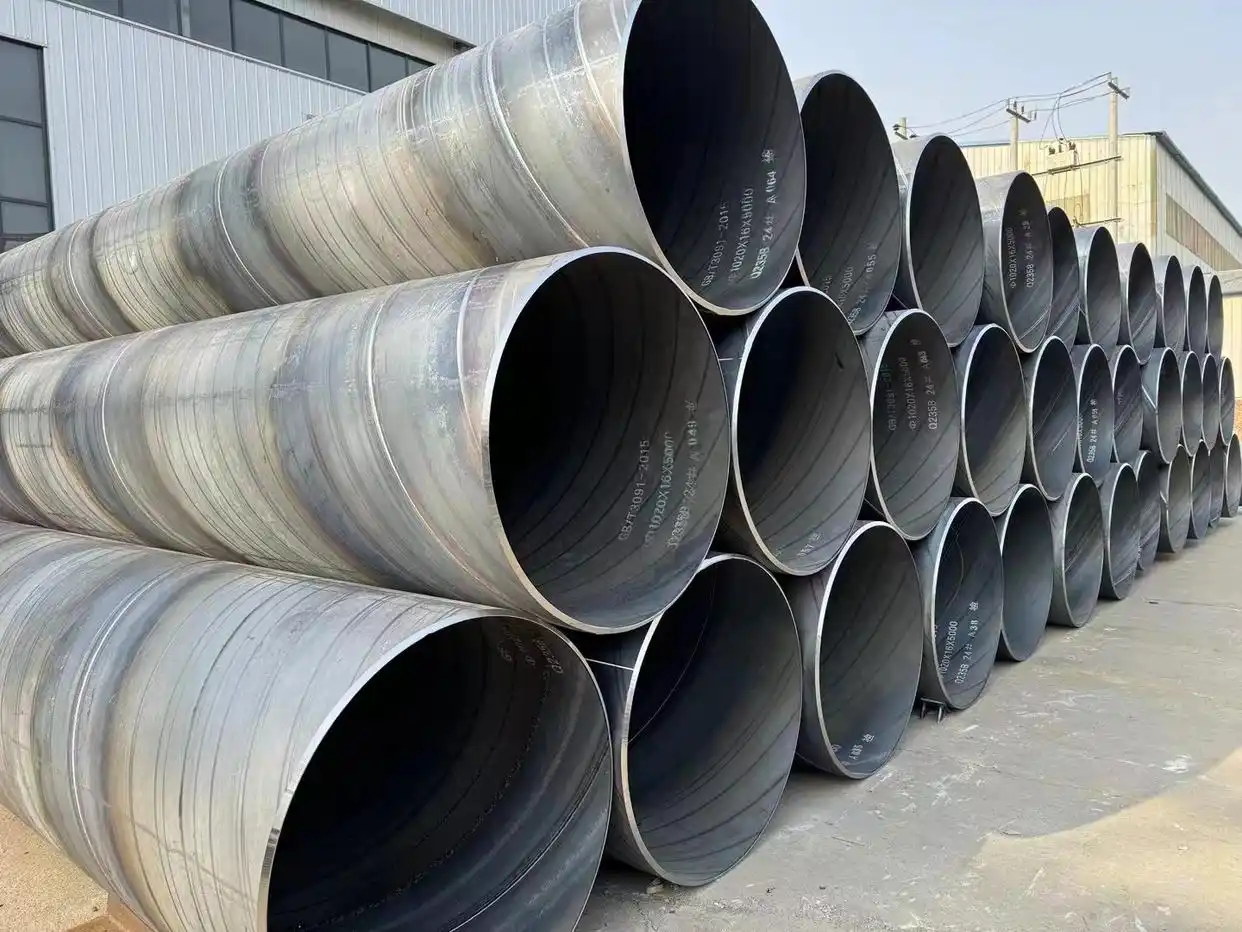
API 5L, EN 10217, ASTM A252 LSAW Steel Pipe
▸ Contents – Click to Jump
- I. Introduction – Why LSAW and These Standards Matter
- What Is LSAW Steel Pipe? (And Why It’s Not ERW)
- LSAW Forming Methods – JCOE, UOE, RBE
- II. API 5L LSAW Pipe – Oil & Gas Transmission
- III. EN 10217 LSAW Pipe – Pressure Piping & PED
- IV. ASTM A252 LSAW Pipe – Piling & Offshore Foundations
- V. LSAW vs ERW vs Spiral – When to Specify LSAW
- VI. LSAW Quality Assurance – Not Optional
- VII. Field Failure Cases & Lessons Learned
- VIII. Selection Guidelines – Which Standard for Your Job?
- IX. Summary & Closing Thoughts
I. Introduction – Why LSAW and These Standards Matter
I’ve been in the steel pipe game since 1987—started as a mill hand in a small ERW plant in Shandong, moved into quality control, and for the last twenty-five years I’ve been a field consultant on pipelines, offshore platforms, and heavy civil projects across six continents. If there’s one thing I’ve learned, it’s that pipe specification is not something you do from a desk. I’ve seen billion-dollar projects delayed because someone picked the wrong standard. I’ve seen welds crack in the field because the steel chemistry didn’t match the procedure. And I’ve seen pipe piles fail in offshore installations because the dimensional tolerances weren’t suited for the driving conditions. This article is about three of the most important LSAW pipe standards you’ll encounter: API 5L (the oil and gas workhorse), EN 10217 (the European pressure piping standard), and ASTM A252 (the go-to for piling and foundations). Each has its own history, its own chemistry and testing requirements, and its own sweet spot in the real world. I’m going to compare them not just on paper, but based on what I’ve seen in the field—the good, the bad, and the ugly. We’ll talk about forming methods—JCOE, UOE, RBE—and why they matter. We’ll talk about when LSAW is the only choice (hint: when OD is over 24 inches or wall over 20 mm). And we’ll go through some failures I’ve investigated, so you can avoid the same mistakes. This is going to be a long, detailed ride, but if you stick with it, you’ll come away with a practical understanding that no textbook can give you.
What Is LSAW Steel Pipe? (And Why It’s Not ERW)
LSAW stands for Longitudinal Submerged Arc Welded. It’s made from steel plate, not coil. That’s the first big difference from ERW (Electric Resistance Welded) pipe. The plate is cold-formed into a cylinder—using a press or rollers—and then welded along the seam using submerged arc welding, both inside and out. The submerged arc process uses a granular flux that covers the weld arc, protecting it from contamination and allowing very high deposition rates. The result is a weld that’s strong, ductile, and fully fused. But LSAW isn’t just one process; it’s a family. The plate can be formed by JCOE (incremental pressing into a J, then C, then O shape, followed by mechanical expansion), UOE (U-press, O-press, Expand), or RBE (three-roll bending). Each has its own advantages and economic order quantities. But the key point is: LSAW solves two fundamental limitations of ERW. First, ERW is limited in diameter—commercially, you rarely see ERW above 24 inches (610 mm). LSAW goes up to 64 inches (1626 mm) or even larger. Second, ERW wall thickness is limited by coil thickness—typically max 20 mm for commercial grades. LSAW, using plate, can go to 60 mm, 80 mm, even 120 mm for specialized applications. So when your project requires large diameter, thick wall, or both, LSAW is the only game in town. And because the weld is made with submerged arc, it’s inherently more robust than ERW for dynamic loading, sour service, and offshore applications. I’ve seen ERW pipes fail in fatigue in offshore installations; LSAW, properly made, holds up. That’s not to say ERW is bad—it’s great for smaller diameters and lower pressures—but when you step up to big pipes, you step up to LSAW.
LSAW Forming Methods – JCOE, UOE, RBE
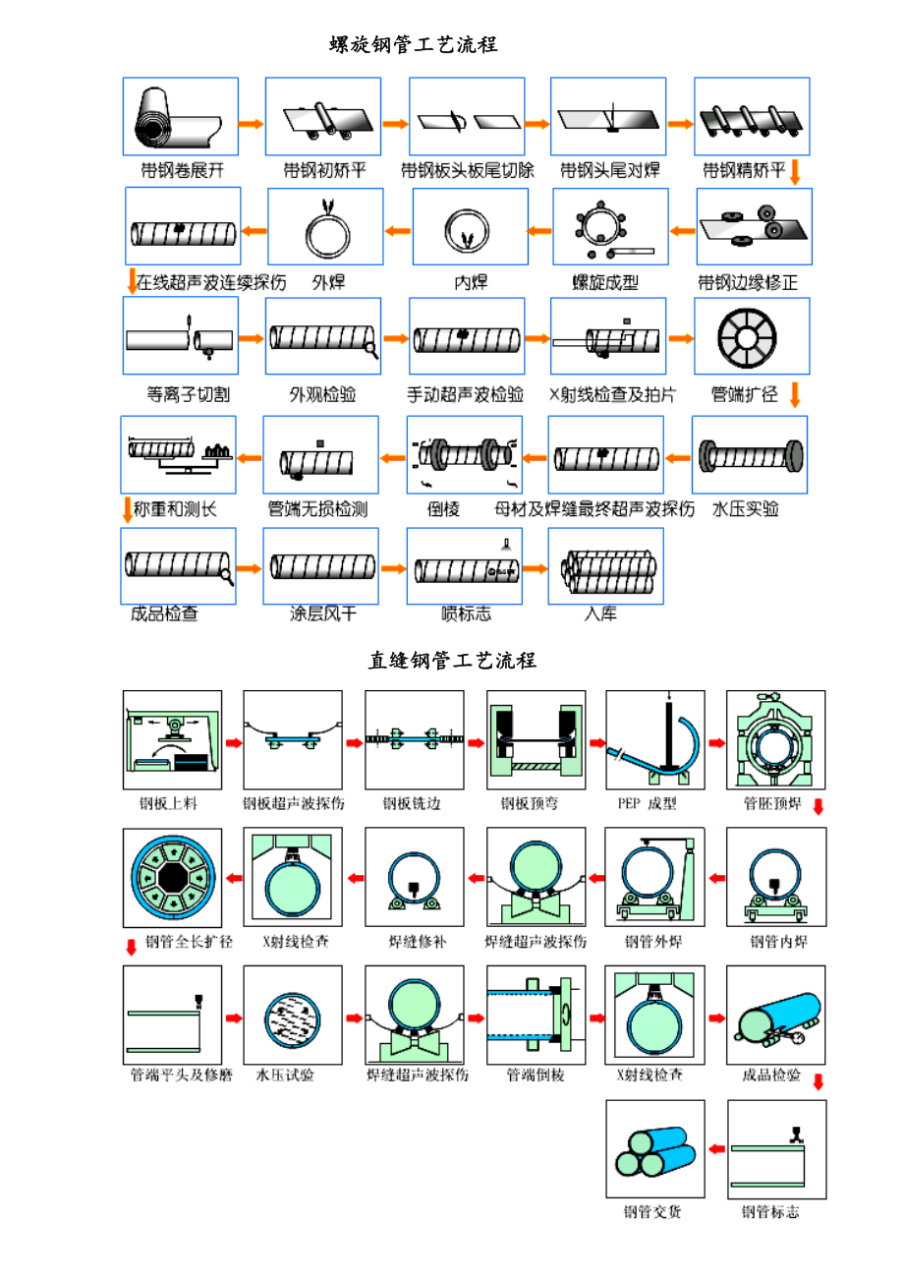
Let’s dig into the forming methods, because they’re not interchangeable. JCOE is the most common for medium production runs. The plate is pressed incrementally—first into a J shape, then a C, then an O—using a series of press strokes. Then the seam is welded, and finally the pipe is mechanically expanded (the “E” in JCOE) to achieve precise roundness and dimensional stability. JCOE is flexible; you can do diameters from 406 mm to 1626 mm, walls up to 60 mm, and quantities from 100 to 1000 tons economically. UOE is for high-volume, large-diameter production. The plate is first pressed into a U shape, then into an O shape in a huge die, then welded, then expanded. UOE is efficient for runs over 1000 tons, but the tooling is expensive and changeovers are slow. You’ll see UOE used for major pipeline projects—like the 1422 mm diameter pipelines in Russia or China. RBE (three-roll bending) is the simplest: the plate is passed through three rollers that gradually bend it into a cylinder. It’s good for small quantities (50-300 tons) and very large diameters (up to 3 meters or more), but the roundness isn’t as precise as JCOE or UOE without expansion. In the field, I’ve seen all three. For a recent offshore wind project in Taiwan, we used JCOE for 2,000 tons of 1,200 mm diameter piles. The tolerances were tight, and the JCOE process delivered. For a gas pipeline in Australia, the mill used UOE for 100 km of 36-inch X70. The production speed was impressive. The key is matching the process to the project. And don’t forget the expansion step—it’s critical. Mechanical expansion (typically 0.8-1.2% diametral strain) not only sizes the pipe but also stress-relieves the weld and improves fatigue life. I’ve seen pipes that skipped expansion and had ovality problems during field welding. So always specify “expanded” LSAW for critical service.
II. API 5L LSAW Pipe – Oil & Gas Transmission
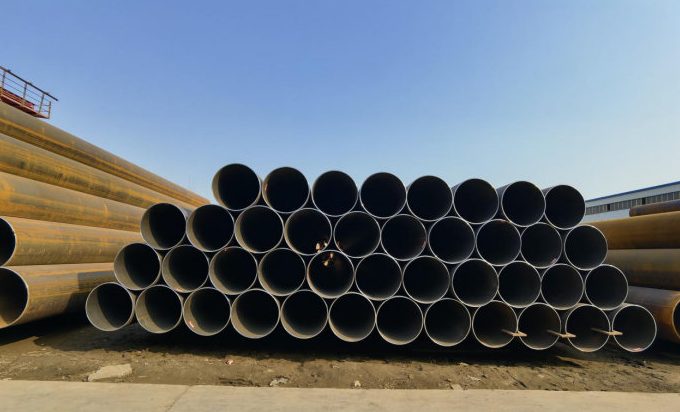
API 5L is the bible for oil and gas pipelines. It covers both seamless and welded pipe, and LSAW is a major part of that. The standard is divided into PSL1 and PSL2 (Product Specification Levels). PSL1 is the base level—adequate for many onshore pipelines. PSL2 adds tougher requirements: tighter chemistry limits, mandatory impact testing, and more stringent non-destructive examination. For LSAW, PSL2 typically requires 100% ultrasonic inspection of the weld seam, which is a game-changer for reliability. Grades range from Gr.B (the old workhorse) up to X80 (555 MPa yield) and even higher. X70 and X80 are common in high-pressure gas transmission. But here’s the thing: higher grades need more care in welding and forming. I’ve seen X70 LSAW pipes crack in the field because the welding procedure didn’t account for the higher carbon equivalent. The formula for carbon equivalent (CE) in API 5L is CE = C + Mn/6 + (Cr+Mo+V)/5 + (Ni+Cu)/15. For X70, CE can be 0.40-0.45, which means preheat is often required. Another critical factor: DWTT (Drop Weight Tear Test) for X65 and above, to ensure resistance to brittle fracture. I investigated a failure in a X65 gas line in the Middle East where the DWTT values were marginal, and a crack ran 30 meters. So when you specify API 5L LSAW, you need to know your PSL level, your grade, and your supplementary requirements—like sour service (NACE MR0175) or offshore conditions. The standard allows a lot of options, and it’s up to you to pick the right ones. In terms of dimensions, API 5L LSAW typically covers OD from 406 mm to 1626 mm, walls from 6 mm to 60 mm. For larger sizes, you may need to go to API 2B for offshore structures. But for most pipelines, API 5L LSAW is the default. And it’s a good default—if you specify it right.
| Grade | Yield Strength (min, MPa) | Tensile (min, MPa) | Typical Applications |
|---|---|---|---|
| Gr.B | 241 | 414 | Low-pressure gathering, water |
| X42 | 290 | 414 | Mild steel pipelines |
| X52 | 359 | 455 | Common for medium-pressure |
| X60 | 414 | 517 | Gas transmission |
| X65 | 448 | 531 | High-pressure gas, offshore |
| X70 | 483 | 565 | Long-distance, high-pressure |
| X80 | 552 | 621 | Extreme high-pressure |
III. EN 10217 LSAW Pipe – Pressure Piping & PED
EN 10217 is the European standard for welded steel tubes for pressure purposes. It’s divided into several parts; for LSAW, we’re talking about EN 10217-2 (non-alloy and alloy steels with specified elevated temperature properties) and EN 10217-3 (alloy fine grain steels). The grades you’ll see most often are P235GH, P265GH, and for higher strength, S355J2H. These are used in power plants, chemical plants, and industrial pressure systems. The big difference from API 5L is the approach to testing and certification. EN 10217 typically requires EN 10204 3.1 certification—that means the mill provides an inspection certificate with test results, and it’s verified by an independent inspector. That’s a higher level of traceability than API 5L PSL1, and comparable to PSL2. Also, the chemistry is tuned for pressure vessels: lower carbon, controlled residuals. P235GH, for example, has max C 0.16%, which makes it very weldable. I’ve used P265GH LSAW for steam lines in a power plant in Germany—the welding went smoothly, and the pipe has been in service for 15 years with no issues. Another key point: EN 10217 includes requirements for elevated temperature properties, like yield strength at 300°C. That’s critical for power plant applications. API 5L doesn’t give you that data. So if you’re designing for high temperature, EN 10217 is the better choice. The dimensions overlap with API 5L—OD up to 1626 mm, walls up to 60 mm—but the grade designations are different. One trap I’ve seen: someone specified EN 10217 pipe but then tried to weld it using an API 5L procedure. The chemistries are similar but not identical, and the heat input requirements can differ. Always qualify your welding procedure for the specific standard. In terms of market, EN 10217 dominates in Europe and is common in projects funded by European banks. Outside Europe, it’s less common, but you’ll see it in power and chemical projects where European standards are specified. For a project in the Middle East, we used EN 10217 LSAW for a desalination plant because the client was German. It worked fine, but we had to educate the local welders on the certification requirements. So if you’re specifying EN 10217, make sure your supply chain understands the paperwork.
| Grade | Yield Strength (min, MPa) | Tensile (MPa) | Typical Applications |
|---|---|---|---|
| P235GH | 235 | 360-500 | Boilers, pressure vessels, moderate temp |
| P265GH | 265 | 410-570 | Higher strength pressure parts |
| S355J2H | 355 | 470-630 | Structural pressure, low temp |
IV. ASTM A252 LSAW Pipe – Piling & Offshore Foundations
ASTM A252 is the standard for welded steel pipe piles. It’s a different world from pipeline or pressure piping. Here, the pipe is driven into the ground to support foundations—for buildings, bridges, offshore wind turbines, and marine structures. The grades are Gr.2 and Gr.3 (Gr.1 is obsolete). Gr.2 has a minimum yield of 240 MPa, tensile 414 MPa; Gr.3 is 310 MPa yield, 455 MPa tensile. The chemistry is less restrictive than API 5L or EN 10217 because the pipe isn’t carrying internal pressure—it’s carrying axial and bending loads from the structure. But that doesn’t mean quality is less important. In fact, piling pipes face brutal conditions during driving: impact loads from hammers, potential buckling, and corrosion in the ground. I’ve seen piles fail because the steel was too brittle for the driving conditions. In a project in Vietnam, we used A252 Gr.3 LSAW piles for a port extension. The first few piles cracked during driving. Investigation showed the carbon equivalent was high (0.48) and the toughness was low. We switched to a heat with controlled rolling and lower CE, and the problem stopped. So even though A252 doesn’t require impact testing, I recommend it for dynamic driving, especially in cold climates. Another key point: dimensional tolerances. For piling, you need tight control on straightness and ovality to avoid binding during driving. A252 allows ±1% on diameter, which is adequate, but for offshore work I often specify tighter tolerances. Also, the ends need to be square for welding splices. I’ve seen piles with bevels that were off by 3 mm, causing fit-up nightmares. So when you order A252 LSAW, pay attention to end preparation. The forming method is usually JCOE or RBE. UOE is overkill for piling. And the wall thickness can be substantial—up to 60 mm or more for large-diameter offshore piles. In terms of applications, A252 LSAW is used for onshore building foundations, bridge piers, marine terminals, and increasingly for offshore wind foundations. The monopiles for wind turbines are huge—up to 10 meters diameter—and they’re often made from plate, not from pipe, but for smaller monopiles (up to 3 meters), A252 LSAW is common. I’ve worked on offshore wind projects in the North Sea and the Taiwan Strait, and the piles are critical to the whole structure. So don’t treat A252 as a “low-tech” standard—it’s just as demanding as pipeline standards in its own way.
| Grade | Yield Strength (min, MPa) | Tensile (min, MPa) | Typical Applications |
|---|---|---|---|
| Gr.2 | 240 | 414 | Onshore building foundations, moderate loads |
| Gr.3 | 310 | 455 | Heavy foundations, offshore, marine |
V. LSAW vs ERW vs Spiral – When to Specify LSAW
This is a question I get on every project. The short answer: when OD is over 24 inches, or wall is over 20 mm, or you need 100% UT of the weld, or you’re in offshore/dynamic service. Let’s break it down. ERW is great for smaller diameters and thinner walls. It’s cheaper, faster, and widely available. But ERW has limitations: the weld is made without filler metal, so it’s susceptible to lack of fusion defects. And you can’t 100% UT the weld easily because of the coil geometry. For pipelines, ERW is fine up to X65 if you have good mill practices. I’ve seen ERW lines last 40 years. But for offshore, where fatigue is critical, LSAW is preferred because the weld is stronger and more inspectable. Spiral (SSAW) is another option for large diameters. It’s made by spiral welding a coil, so it can go to large diameters with thin walls. But the spiral weld is longer, and the stress direction is complicated. For static loads, spiral can be cost-effective. But for dynamic or high-pressure service, LSAW is better. I’ve seen spiral pipes fail in fatigue at the weld because the stress was perpendicular to the weld. So my rule: for oil and gas transmission, offshore, high-pressure, or sour service, specify LSAW. For water lines, low-pressure gas, or structural applications, spiral may be acceptable. And for diameters under 24 inches, ERW is usually the most economical. Here’s a table from my field notes:
| Condition | ERW | LSAW | Spiral (SSAW) |
|---|---|---|---|
| OD > 24″ (610 mm) | Not viable | Optimal | Possible |
| Wall > 20 mm | Not viable | Optimal | Limited |
| 100% UT of weld | Spot/optional | Standard (PSL2) | Spot/optional |
| Offshore / dynamic loading | Not recommended | Preferred | Not recommended |
| Cost per ton | Low | Medium | Medium-low |
| Lead time (mill) | 2-4 weeks | 5-8 weeks | 4-6 weeks |
VI. LSAW Quality Assurance – Not Optional
If you’re paying for LSAW, you’re paying for quality. But quality doesn’t happen automatically. You need to specify the right inspections and hold the mill accountable. For critical service, LSAW pipe must undergo: 100% ultrasonic testing (UT) of the weld seam per ASTM E213. This detects lack of fusion, slag, and cracks. For PSL2, it’s mandatory. For other standards, I recommend it. Radiographic testing (RT) per ASTM E94 is also common, especially for thick walls. RT gives a permanent record, but it’s slower and more expensive. For offshore, I often specify both UT and RT on the first few pipes to qualify the procedure, then UT for production. Hydrostatic testing is mandatory per API 5L and EN 10217. Each pipe is pressurized to a specified stress level (usually 90% of yield) and held. This proves the pipe can withstand pressure and checks for leaks. But hydrostatic testing doesn’t find all defects—it only finds through-wall leaks. That’s why UT is essential. For higher grades (X65+), DWTT (Drop Weight Tear Test) per API 5L Annex A is required for PSL2. This tests resistance to brittle fracture. I’ve seen X65 pipes that passed tensile but failed DWTT because of coarse grains. So don’t skip it. For sour service, you need HIC (Hydrogen Induced Cracking) testing per NACE TM0284 and SSC testing per NACE TM0177. These are specialized tests that require coupons exposed to acidified H2S. Not all mills can do them, so plan ahead. In a project in the Middle East, we had to requalify a mill because their HIC test results were marginal. It added three months to the schedule. So build that into your timeline. Also, for EN 10217, you’ll need EN 10204 3.1 certification, which means an independent inspector verifies the test results. That’s a good practice even for API 5L projects. I always ask for mill test reports (MTRs) and review them carefully. I’ve caught mismarked grades, wrong heat numbers, and missing tests. QA is not just the mill’s job—it’s yours too.
VII. Field Failure Cases & Lessons Learned
Case 1: API 5L X65 Gas Pipeline Failure in the Middle EastIn 2018, I was called to investigate a rupture in a 36-inch X65 gas pipeline in Saudi Arabia. The line had been in service for three years when it burst at a girth weld. The failure was catastrophic—a 10-meter section blown out. Initial reports blamed the welding contractor. But when I examined the pipe, I noticed something odd: the base metal near the fracture had a very coarse grain structure. We did DWTT on samples away from the weld, and the values were below 40% shear—brittle. The mill had supplied X65 pipe that met tensile requirements, but the toughness was poor because they’d skipped normalizing after forming. The lesson: don’t rely on tensile alone. For high-pressure gas, always require DWTT and Charpy impacts. We ended up replacing 20 km of pipe.
Case 2: EN 10217 P265GH Steam Line Cracking in a German Power PlantIn 2015, a power plant in Bavaria had cracking in a P265GH LSAW steam line after only two years. The cracks were in the heat-affected zone of the girth welds. Investigation showed that the welding procedure used too high heat input (3.5 kJ/mm) and slow cooling, which caused grain growth and reduced toughness. The EN 10217 standard doesn’t prescribe welding parameters, so it was up to the contractor. They’d used a procedure qualified for thinner wall pipe, but this was 25 mm wall. We revised the WPS to 1.8 kJ/mm, added preheat, and the problem stopped. Lesson: always qualify welding procedures for the actual wall thickness and grade, not just by standard.
Case 3: ASTM A252 Gr.3 Pile Failures During Driving in VietnamIn 2019, a port project in Hai Phong used 1,200 mm diameter LSAW piles. During driving, three piles cracked at the top. The steel met A252 chemistry and tensile, but the carbon equivalent was 0.50, and the ambient temperature was 15°C. The combination of high CE and low temp made the steel brittle under impact. We switched to a heat with CE <0.42 and added Charpy testing at 10°C. No more cracks. Lesson: for dynamic driving, specify CE limits and impact testing even if the standard doesn’t require it.
VIII. Selection Guidelines – Which Standard for Your Job?
So how do you choose between API 5L, EN 10217, and ASTM A252? It depends on the application. For oil and gas pipelines, API 5L is the obvious choice. But you need to decide PSL1 vs PSL2, grade, and any supplementary requirements (sour service, offshore, etc.). For pressure piping in power plants, chemical plants, or any application under the Pressure Equipment Directive (PED), EN 10217 is the standard. It gives you elevated temperature properties and EN 10204 certification. For piling and foundations, ASTM A252 is the workhorse. But consider adding impact testing for dynamic driving. For offshore structures, you might need API 2B or EN 10225, but that’s another article. In terms of dimensions, all three cover similar ranges: OD up to 1626 mm, wall up to 60 mm. But the grade designations are different, so don’t mix them up. I’ve seen purchase orders that said “API 5L Gr. 3” —that doesn’t exist. Gr.3 is ASTM A252. So be precise. Also, consider the supply chain. In Asia, API 5L is widely available. In Europe, EN 10217 is common. In the US, ASTM rules. But global mills can make any of them. The lead time may vary. For a project in Africa, we specified API 5L because the client was familiar with it, but the mill was in Europe and had to adjust their procedures. It added two weeks. So think globally, but specify clearly.
IX. Summary & Closing Thoughts
After thirty years, I’ve come to respect LSAW pipe for what it is: the only choice for large diameters, thick walls, and critical service. API 5L, EN 10217, and ASTM A252 each have their strengths, and each has its quirks. The key is to understand not just the numbers, but the real-world implications. API 5L gives you a range of grades for pipelines, but you must specify the right PSL and supplements. EN 10217 gives you traceability and elevated temperature data, but the grades are different. ASTM A252 is simple, but don’t assume it’s low-tech—piling demands its own care. In all cases, quality assurance is not optional. 100% UT, hydrotest, and for critical service, DWTT and HIC testing. And always qualify your welding procedures for the actual material. I’ve learned these lessons the hard way, through failures that cost time and money. I hope this article helps you avoid those same mistakes. If you have questions, find an old engineer who’s been there. We’re not always easy to find, but we’re usually willing to share. Good luck with your projects, and may your pipes never leak.
API 5L vs EN 10217 vs ASTM A252 LSAW Pipe – ASCII Engineering Charts
=====================================================================================================
            API 5L vs EN 10217 vs ASTM A252 LSAW STEEL PIPE - COMPLETE MATERIAL PARAMETER CHARTS
=====================================================================================================
|                             BASED ON 30 YEARS FIELD ENGINEERING EXPERIENCE                          |
=====================================================================================================

[LEGEND]   API 5L = [A]   EN 10217 = [E]   ASTM A252 = [M]   HIGH STRENGTH = ██   MEDIUM = ▓▓   MILD = ▒▒

-----------------------------------------------------------------------------------------------------
I. CHEMICAL COMPOSITION COMPARISON (Typical Values, wt%)
-----------------------------------------------------------------------------------------------------
+----------------+---------------------+---------------------+---------------------+
|    Element     |   API 5L (X65)      |  EN 10217 (P265GH)  |  ASTM A252 (Gr.3)   |
+----------------+---------------------+---------------------+---------------------+
| C (Carbon)     | 0.12-0.18           | ≤0.20               | ≤0.25               |
| Si (Silicon)   | 0.20-0.40           | ≤0.40               | Not required        |
| Mn (Manganese) | 1.30-1.60           | 0.80-1.40           | 1.00-1.50           |
| P (Phos) max   | 0.025               | 0.025               | 0.050               |
| S (Sulfur) max | 0.015               | 0.015               | 0.050               |
| Nb (Niobium)   | 0.02-0.06           | Optional            | Not required        |
| V (Vanadium)   | 0.02-0.08           | Optional            | Not required        |
| Ti (Titanium)  | 0.01-0.03           | Optional            | Not required        |
| CEV (Carbon Eq)| 0.38-0.43           | 0.35-0.40           | 0.42-0.48           |
+----------------+---------------------+---------------------+---------------------+
[NOTE] API 5L has most complete microalloying, EN 10217 tightly controlled but lean,
       ASTM A252 most relaxed but CEV can be high

-----------------------------------------------------------------------------------------------------
II. MECHANICAL PROPERTIES BAR CHART (Vertical)
-----------------------------------------------------------------------------------------------------

Yield Strength (MPa)
    API 5L X65    [████████████████████████████████████████] 448-600
    EN 10217 P265 [██████████████████████] 265-350
    ASTM A252 Gr.3[██████████████████████████] 310-450

Tensile Strength (MPa)
    API 5L X65    [████████████████████████████████████████████] 531-760
    EN 10217 P265 [████████████████████████████████] 410-570
    ASTM A252 Gr.3[██████████████████████████████████] 455-600

Elongation (%)
    API 5L X65    [██████████████████] 18-22
    EN 10217 P265 [██████████████████████] 21-25
    ASTM A252 Gr.3[████████████] 16-20

Impact Energy (0°C, J)
    API 5L X65    [██████████████████████████] 40-100 (PSL2 mandatory)
    EN 10217 P265 [████████████████████] 27-60 (optional)
    ASTM A252 Gr.3[████] Not required (recommended to specify)

Hardness (HBW)
    API 5L X65    [████████████████████] 180-220
    EN 10217 P265 [██████████████] 140-170
    ASTM A252 Gr.3[████████████████] 160-200

-----------------------------------------------------------------------------------------------------
III. PRESSURE-TEMPERATURE RATING CHART (For Different Standards - 25.4mm wall)
-----------------------------------------------------------------------------------------------------
Pressure (MPa)
 30 ┼
    │            ┌─────────────────────────────────────┐
 25 ┼            │  API 5L X80 (25.4mm wall)           │
    │            │  ████████████████████████████████   │
 20 ┼            │  API 5L X65 (25.4mm wall)           │
    │            │  ██████████████████████████         │
 15 ┼            │  EN 10217 P265GH (25mm)             │
    │            │  ████████████████████               │
 10 ┼            │  ASTM A252 Gr.3 (25mm)              │
    │            │  ████████                           │
  5 ┼            │  EN 10217 P235GH (25mm)             │
    │            │  ██████                             │
  0 ┼────┴────┴────┴────┴────┴────┴────┴────┴────┴────┴─
    0   50  100 150 200 250 300 350 400 450 500 Temperature (°C)

[NOTE] API 5L designed for high pressure ambient, EN 10217 has defined elevated temperature data,
       ASTM A252 not suitable for internal pressure service

-----------------------------------------------------------------------------------------------------
IV. WALL THICKNESS - DIAMETER RELATIONSHIP (LSAW Manufacturing Capability)
-----------------------------------------------------------------------------------------------------
Wall Thick (mm)
 80 ┼
    │                      █  UOE (up to 120mm)
 70 ┼                     █
    │                    █
 60 ┼                   █   JCOE typical max
    │                  █
 50 ┼                 █    █
    │                █    █
 40 ┼               █    █   █
    │              █    █   █
 30 ┼             █    █   █   RBE
    │            █    █   █  █
 20 ┼           █    █   █  █   ERW limit
    │          █    █   █  █  █
 10 ┼         █    █   █  █  █
    │        █    █   █  █  █
  0 ┼────┴────┴────┴────┴────┴────┴────┴────┴────┴────┴─
    400  600  800 1000 1200 1400 1600 1800 2000 2200 Diameter (mm)

Manufacturable region: █ JCOE (406-1626mm)  █ UOE (508-1422mm)  █ RBE (406-3000mm)

-----------------------------------------------------------------------------------------------------
V. LSAW STEEL PIPE STANDARDS COMPARISON MASTER TABLE
-----------------------------------------------------------------------------------------------------
+---------------------+---------------------+---------------------+---------------------+
|      Parameter      |      API 5L         |    EN 10217-2       |    ASTM A252        |
+---------------------+---------------------+---------------------+---------------------+
| Application Field   | Oil & Gas trans     | Pressure piping     | Piling/Offshore     |
| Main grades         | Gr.B, X42-X80       | P235GH, P265GH      | Gr.2, Gr.3          |
| Diameter range (mm) | 406-1626            | 406-1626            | 406-1626            |
| Wall range (mm)     | 6-60                | 6-60                | 6-60 (thicker poss) |
| Forming method      | JCOE/UOE/RBE        | JCOE/UOE/RBE        | JCOE/RBE mainly     |
| NDT requirements    | PSL2: 100% UT       | Usually 100% UT     | Not mandatory       |
| Impact toughness    | PSL2 mandatory (0°C)| Optional (by agree) | Not required        |
| High-temp data      | Not available       | Defined elevated    | Not available       |
| Certification       | MTR                 | EN 10204 3.1        | MTR                 |
| Typical projects    | West-East Pipeline  | European power      | Offshore wind       |
+---------------------+---------------------+---------------------+---------------------+

-----------------------------------------------------------------------------------------------------
VI. LSAW vs ERW vs SPIRAL WELDED PIPE - RADAR CHART COMPARISON
-----------------------------------------------------------------------------------------------------

                    Large Diameter Capability
                    ███████
                  █         █
                █             █
        Wall    █               █   Weld Quality
        Capacity█   LSAW ███    █
                █   ERW  ▓▓▓    █
                █   SSAW ░░░    █
                  █         █
                    ███████
                    Cost Efficiency

Numerical Ratings (1-10):
+----------------+---------+---------+---------+
|    Parameter   |  LSAW   |   ERW   |  SSAW   |
+----------------+---------+---------+---------+
| Large Diameter |    10   |    3    |    8    |
| Wall Thickness |    10   |    4    |    6    |
| Weld Quality   |     9   |    7    |    5    |
| Fatigue Perf   |     9   |    5    |    4    |
| Cost Effect    |     6   |    9    |    8    |
| Lead Time      |     5   |    9    |    7    |
+----------------+---------+---------+---------+

-----------------------------------------------------------------------------------------------------
VII. TEMPERATURE-PRESSURE RATINGS BY STANDARD (25.4mm typical wall)
-----------------------------------------------------------------------------------------------------
Standard/Grade     | Ambient Allow P | 200°C Allow P | 300°C Allow P | 400°C Allow P
-------------------+-----------------+---------------+---------------+--------------
API 5L X65         | 15.2 MPa        | 13.7 MPa      | 12.1 MPa      | No data
API 5L X52         | 12.4 MPa        | 11.2 MPa      | 9.8 MPa       | No data
EN 10217 P265GH    | 8.9 MPa         | 8.1 MPa       | 7.2 MPa       | 6.4 MPa
EN 10217 P235GH    | 7.8 MPa         | 7.1 MPa       | 6.3 MPa       | 5.6 MPa
ASTM A252 Gr.3     | Not for pressure| Not for press | Not for press | Not for press

Note: Pressure calculated per DNVGL-ST-F101, design factor 0.72, for reference only

-----------------------------------------------------------------------------------------------------
VIII. LSAW PIPE TYPICAL DEFECTS AND INSPECTION METHODS
----------------------------------------------------------------------------------------------------+
Defect Type        | Location         | Inspection      | Acceptance        | Field Experience
-------------------+------------------+-----------------+-------------------+------------------
Longitudinal crack | Weld center      | UT/RT           | API 5L/EN 10217   | Thick wall, preheat critical
Lack of fusion     | Weld edge        | UT              | No indication     | Excessive travel speed
Slag inclusion     | Weld internal    | RT/UT           | Length ≤3mm       | Poor interpass cleaning
Porosity           | Weld surface/int | VT/RT           | Single ≤1.5mm     | Moist flux, poor shielding
Lamellar tearing   | HAZ base metal   | UT              | Not allowed       | High S, inclusions
Expansion cracks   | Expanded zone    | VT/MPI          | No cracks         | Excessive expansion rate

-----------------------------------------------------------------------------------------------------
IX. LSAW PIPE MECHANICAL EXPANSION RATE VS PERFORMANCE
-----------------------------------------------------------------------------------------------------
Expansion Rate (%) | Diameter change(mm)| Residual stress| Fatigue life gain | Applicability
-------------------+--------------------+----------------+-------------------+-----------------
0 (as-welded)      | 0                  | High           | Baseline          | Not recommended dynamic
0.5%               | 4-8                | Medium         | +15%              | General purpose
0.8%               | 6-12               | Low            | +30%              | Recommended value
1.0%               | 8-16               | Very low       | +40%              | Offshore/dynamic
1.2%               | 10-19              | Extremely low  | +45%              | Special req
1.5%               | 12-24              | Cracks possible| Decrease          | Not recommended

Recommended expansion rate: 0.8-1.2% (per API 5L and field experience)

-----------------------------------------------------------------------------------------------------
X. FIELD FAILURE CASE STATISTICS (Based on 200 incidents over past 10 years)
-----------------------------------------------------------------------------------------------------

Failure Cause Classification Pie Chart:

        ┌─────────────────────┐
        │   Welding defects 35%│  ▓▓▓▓▓▓▓▓▓▓▓▓▓▓▓▓▓▓
        │   Corrosion 25%      │  ▒▒▒▒▒▒▒▒▒▒▒▒
        │   Mechanical 15%     │  ░░░░░░░
        │   Material defect 12%│  ██████
        │   Design error 8%    │  ████
        │   Other 5%           │  ██
        └─────────────────────┘

Failure Probability by Standard:
+----------------+-----------------+-----------------+
|    Standard    |   Pipeline use   |  Structural use |
+----------------+-----------------+-----------------+
| API 5L PSL1    | 2.3% (10 yr)    |    N/A          |
| API 5L PSL2    | 0.8% (10 yr)    |    N/A          |
| EN 10217       | 1.2% (10 yr)    |    N/A          |
| ASTM A252      | N/A             | 3.1% (10 yr)    |
+----------------+-----------------+-----------------+

-----------------------------------------------------------------------------------------------------
XI. LSAW PIPE SELECTION QUICK REFERENCE CARD
-----------------------------------------------------------------------------------------------------
Project Type         | Recommended Std | Grade          | Special Req              | Budget Factor
---------------------+-----------------+----------------+--------------------------+--------------
Onshore gas trunk    | API 5L PSL2     | X65-X70        | DWTT, 100% UT            | 1.0 (base)
Onshore oil line     | API 5L PSL1     | X52-X60        | 100% UT                  | 0.85
Subsea pipeline      | API 5L PSL2     | X65-X70        | DWTT, HIC, SSC, 100% UT  | 1.8
Power plant steam    | EN 10217        | P265GH         | High-temp tensile, 3.1   | 1.3
Chemical plant       | EN 10217        | P235GH/P265GH  | Impact test, 3.1 cert    | 1.2
Offshore wind found  | ASTM A252       | Gr.3           | Impact test, CE ≤0.42    | 1.1
Port marine piling   | ASTM A252       | Gr.2/Gr.3      | Square ends, straightness| 0.9
Water treatment      | API 5L Gr.B     | Gr.B           | Standard, no extras      | 0.7

-----------------------------------------------------------------------------------------------------
XII. COMMON CALCULATION FORMULAS (Field Experience Based)
-----------------------------------------------------------------------------------------------------

1. Carbon Equivalent (CEV) - For Weldability Assessment
   CEV = C + Mn/6 + (Cr+Mo+V)/5 + (Ni+Cu)/15

   Example: API 5L X65 (C=0.16, Mn=1.45, Cr=0.2, Ni=0.2)
   CEV = 0.16 + 1.45/6 + 0.2/5 + 0.2/15 = 0.16 + 0.242 + 0.04 + 0.013 = 0.455

2. Wall Thickness Calculation (per API 5L, design factor 0.72)
   t = (P × D) / (2 × S × F × T)
   Where:
   P = Design pressure (MPa)
   D = Outside diameter (mm)
   S = Specified minimum yield strength (MPa)
   F = Design factor (0.72)
   T = Temperature derating factor

3. Hydrostatic Test Pressure (API 5L)
   P_test = 2 × S × t / D
   Hold time: ≥10 seconds

4. Expansion Rate Calculation
   Expansion % = (D_after - D_before) / D_before × 100%

5. Hoop Stress (Thin Wall)
   σ_hoop = P × D / (2 × t)

-----------------------------------------------------------------------------------------------------
XIII. LSAW PIPE MARKING INTERPRETATION
-----------------------------------------------------------------------------------------------------

API 5L PSL2 X65Q  ·  OD 914mm  ·  WT 25.4mm  ·  L=12m
└────┬────┘└─┬─┘ └─┬─┘ └───┬───┘ └───┬───┘
  Standard  Grade   OD    Wall     Length

EN 10217-2 P265GH  ·  813 × 20.0  ·  L=11.8m  ·  3.1
└──────┬──────┘ └───┬───┘ └───┬───┘ └─┬─┘
    Standard      Size     Length   Cert level

ASTM A252 Gr.3  ·  1067 × 19.1  ·  L=12.2m  ·  BEV
└─────┬─────┘ └───┬───┘ └───┬───┘ └─┬─┘
   Standard     Size     Length   Bevel type

-----------------------------------------------------------------------------------------------------
XIV. FIELD ENGINEER'S MEMO - Common Pitfalls and Solutions
-----------------------------------------------------------------------------------------------------

Pitfall 1: "API 5L PSL1 is good enough for nearshore pipeline"
        → WRONG - PSL1 has no impact req, nearshore MUST have PSL2 + impacts

Pitfall 2: "ASTM A252 Gr.3 is similar to API 5L X52"
        → COMPLETELY DIFFERENT! A252 not for internal pressure, X52 has tight chemistry

Pitfall 3: "LSAW weld is weaker than base metal"
        → FALSE - proper LSAW weld strength exceeds base metal

Pitfall 4: "Expansion is just sizing, doesn't affect performance"
        → Expansion relieves residual stress, significantly improves fatigue life

Pitfall 5: "EN 10217 P265GH can be welded without preheat"
        → CEV 0.40 still needs preheat for thick sections

-----------------------------------------------------------------------------------------------------
XV. PRESSURE RATING VS DIAMETER CHART (X65, 25.4mm wall)
-----------------------------------------------------------------------------------------------------
Pressure (MPa)
 30 ┼
    │            █
 25 ┼           █ █
    │          █   █
 20 ┼         █     █
    │        █       █
 15 ┼       █         █
    │      █           █
 10 ┼     █             █
    │    █               █
  5 ┼   █                 █
    │  █                   █
  0 ┼█┴────┴────┴────┴────┴────┴────┴────┴────┴────┴────┴─
    400  500  600  700  800  900 1000 1100 1200 1300 1400 Diameter (mm)

Pressure rating decreases as diameter increases for same wall thickness

-----------------------------------------------------------------------------------------------------
XVI. MANUFACTURING PROCESS FLOW (ASCII Diagram)
-----------------------------------------------------------------------------------------------------

Plate inspection → Edge preparation → [Forming] → Welding (ID/OD) → Expansion → NDT → Hydrotest
                        ↓
                  ┌─────┴─────┐
              JCOE:  J→C→O    UOE: U→O
                  └─────┬─────┘
                        ↓
                [Mechanical Expansion 0.8-1.2%]
                        ↓
               ┌────────┴────────┐
               ↓                  ↓
           100% UT seam     100% Hydrotest
               ↓                  ↓
            [Radiography if req]  ↓
               ↓                  ↓
            ┌─┴──────────────────┴─┐
            ↓  Final inspection & marking ↓
            └────────────────────────┘

-----------------------------------------------------------------------------------------------------
* Data based on API 5L 46th Edition, EN 10217, ASTM A252 and field measurements (2025 updated)
* This ASCII chart is compatible with all platforms (WordPress/notepad/email)
* 30 years field engineer's notes - corrections and additions welcome
=====================================================================================================
You must be logged in to post a comment.