

The Inner Monologue: The Philosophy of the Loose Connection
I am contemplating the EN 1092-1 Type 02 flange, a component that, at first glance, seems contradictory. It is a “Loose Type” flange, yet it is used in PN16 pressure systems where rigidity is usually the primary virtue. Why do we separate the flange ring from the pressure-retaining part? I’m thinking about the “Type 32” or “Type 33” weld-on collars—the ‘lapped ends.’ This is a modular approach to piping. The flange itself never touches the fluid; it sits behind a collar. This means I can use a high-strength carbon steel for the flange ring to handle the bolting stress, while the collar can be a different material—perhaps a more expensive stainless steel or a specifically treated carbon steel—to handle the corrosion or temperature of the media. At Abtersteel, this flexibility is a design advantage. I’m visualizing the welding process. We aren’t welding the flange; we are welding the collar (the ‘stub end’) to the pipe. This solves a massive problem in the field: alignment. With a fixed Weld Neck flange, the bolt holes must be perfectly oriented before you weld. With a Type 02 Loose Flange, you weld the collar first, and then you can rotate the flange ring to match the mating flange perfectly. It’s an elegant solution to the mechanical frustration of ‘two-holing.’ But there’s a trade-off. The load path is different. The bolt force travels through the flange ring, into the back of the collar, and then into the gasket. I need to explore the ‘Contact Face’ and how the PN16 rating—16 bar of constant pressure—is maintained without the structural reinforcement of a tapered hub. This is about shear forces at the collar-flange interface.
Technical Synthesis: EN 1092-1 Type 02 Loose Flange Systems in PN16 Service
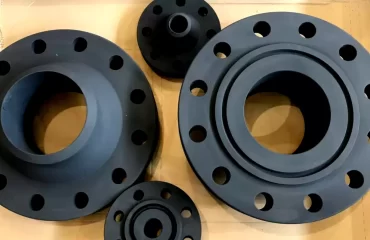
In the rigorous world of European piping standards, the EN 1092-1 Type 02 Loose Flange represents a sophisticated departure from the monolithic architecture of Weld Neck or Slip-On designs. Manufactured by Abtersteel, these components provide a decoupled solution for pressure systems where ease of installation and material optimization are paramount. To understand the Type 02, one must look past the steel ring and into the mechanical synergy between the flange and its associated weld-on collar.
The Decoupled Architecture: Type 02 and Type 32/33
The EN 1092-1 Type 02 is technically a “backing flange.” It is a circular ring with bolt holes but no sealing face. Its sole purpose is to provide the mechanical clamping force. The actual sealing is performed by a Type 32 (Weld-on Plate Collar) or a Type 33 (Lapped Pipe End).
When Abtersteel engineers specify this system, they are addressing two primary challenges:
-
Material Economy: In a corrosive environment, only the collar (which contacts the fluid) needs to be made of expensive alloy. The Type 02 flange can be made of standard P245GH or even S235JR carbon steel, significantly reducing the Total Cost of Ownership (TCO).
-
Rotational Freedom: Because the flange is not welded to the pipe, it can rotate 360 degrees. This is invaluable for connecting to valves or pumps where the bolt-hole orientation is fixed and cannot be adjusted.
PN16 Pressure Dynamics: The Clamping Force
The PN16 designation indicates a nominal pressure of 16 bar at ambient temperature. In a Type 02 system, the bolt load ($F_b$) must be transmitted from the flange ring to the collar. This creates a high-stress contact point at the “lap” or the shoulder of the collar.
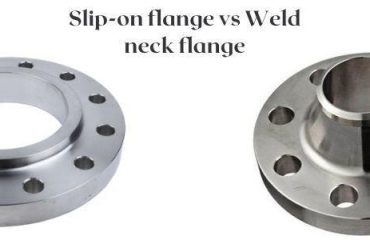
Unlike a Weld Neck flange where the stress is distributed through a tapered hub, the Type 02 relies on the thickness of the ring to prevent “cupping” or bowing. Abtersteel’s Type 02 flanges for PN16 service are designed with a specific thickness ($C1$) that ensures the bolt force is evenly distributed across the gasket surface of the collar.
| DN (Nominal Size) | Flange OD (D) | Bolt Circle (K) | Number of Bolts | Bolt Hole Dia (L) | Flange Thickness (C1) |
| DN50 | 165 mm | 125 mm | 4 | 18 mm | 20 mm |
| DN100 | 220 mm | 180 mm | 8 | 18 mm | 22 mm |
| DN200 | 340 mm | 295 mm | 12 | 22 mm | 26 mm |
| DN300 | 460 mm | 410 mm | 12 | 26 mm | 32 mm |
Data optimized for PN16 service under EN 1092-1 Type 02 standards at Abtersteel.
Welding Methodology: Joining the Collar to the Pipe
The technical integrity of a Type 02 system hinges entirely on the weld between the pipe and the collar (Type 32 or 33). Since the flange itself is “loose,” it cannot contribute to the structural strength of the joint.
The Type 32 Plate Collar Weld
The Type 32 collar is essentially a flat ring. It is welded to the pipe using a double fillet weld or a full penetration butt weld, depending on the wall thickness and the specific requirements of the pressure vessel code (such as EN 13480).
-
Internal Weld: Prevents crevice corrosion and provides a smooth flow path.
-
External Weld: Provides the primary structural attachment to resist the longitudinal pressure thrust ($F_p = P \times A$).
The Type 33 Lapped End Weld
The Type 33 collar has a short “neck” or stub. This is butt-welded to the pipe. This is technically superior for PN16 service because it allows for Volumetric Inspection (Radiography or UT) of the weld. Abtersteel recommends Type 33 for high-vibration environments or systems subject to thermal shock, as the butt weld offers a better fatigue profile than the fillet welds used on Type 32.
Mechanical Stress and the “Radius” Conflict
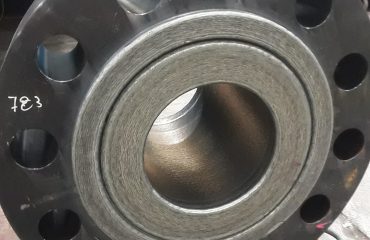
A critical failure point in loose flange systems is the radius at the junction of the collar and the pipe. The Type 02 flange has a small chamfer or radius on its inner bore to accommodate the weld or the radius of the collar.
If the radius of the weld is larger than the chamfer on the Type 02 flange, the flange will not sit flat against the collar. This creates an eccentric load on the bolts, which can lead to:
-
Gasket Crushing: Uneven pressure on the gasket leads to localized failure and leaks.
-
Bolt Fatigue: The bending moment on the bolts causes them to fail far below their tensile limit.
-
Flange Cracking: The carbon steel ring is subjected to a “prying” force it wasn’t designed to handle.
Abtersteel ensures that the bore of the Type 02 flange is machined with a precise tolerance to ensure full-face contact with the back of the collar, maximizing the effective sealing area.
Material Selection: Optimization and Compatibility
One of the most profound advantages of the Abtersteel EN 1092-1 Type 02 system is material decoupling. In a PN16 chemical line, the fluid might require 1.4404 (316L Stainless Steel). In a standard Weld Neck configuration, the entire massive flange must be 316L.
In a Type 02 configuration:
-
Collar (Fluid Contact): 1.4404 (316L) Stainless Steel.
-
Flange (Structural): P245GH or S235JR Carbon Steel (Epoxy coated or Galvanized).
This can result in a 40-60% reduction in material costs for large-diameter pipelines without sacrificing a single bar of pressure resistance.
| Component | Standard Material | Operating Temp Range | Strength (Re) |
| Backing Flange | S235JR / P245GH | $-10^\circ\text{C}$ to $400^\circ\text{C}$ | $235\text{–}245\text{ MPa}$ |
| Weld-on Collar | 1.4307 / 1.4404 | $-196^\circ\text{C}$ to $550^\circ\text{C}$ | $200\text{–}220\text{ MPa}$ |
Thermal Expansion Considerations
In PN16 systems operating at fluctuating temperatures, the Loose Flange system behaves differently than a fixed flange. Since the flange ring is not welded, it can expand and contract slightly independently of the pipe. This reduces the Thermal Stress transferred to the pipe wall. However, engineers must ensure that the thermal expansion of the collar doesn’t cause it to grow significantly more than the flange ring, which could “lock” the assembly and induce unforeseen shear stresses.
Conclusion: Why Choose Abtersteel Type 02 Systems?
The EN 1092-1 Type 02 Loose Flange is the “un-sung hero” of modular piping. It represents a shift from brute-force rigidity to engineered flexibility. By separating the sealing function from the mechanical clamping function, Abtersteel provides a system that is:
-
Easier to Install: Zero bolt-hole alignment issues.
-
Cost-Effective: Strategic use of expensive alloys.
-
Maintainable: The flange ring can be inspected or replaced without cutting the pipe.
For PN16 service, where reliability is non-negotiable but installation conditions are often less than ideal, the Type 02 system offers a technical compromise that sacrifices nothing in terms of safety while gaining everything in terms of practical utility.
You must be logged in to post a comment.