
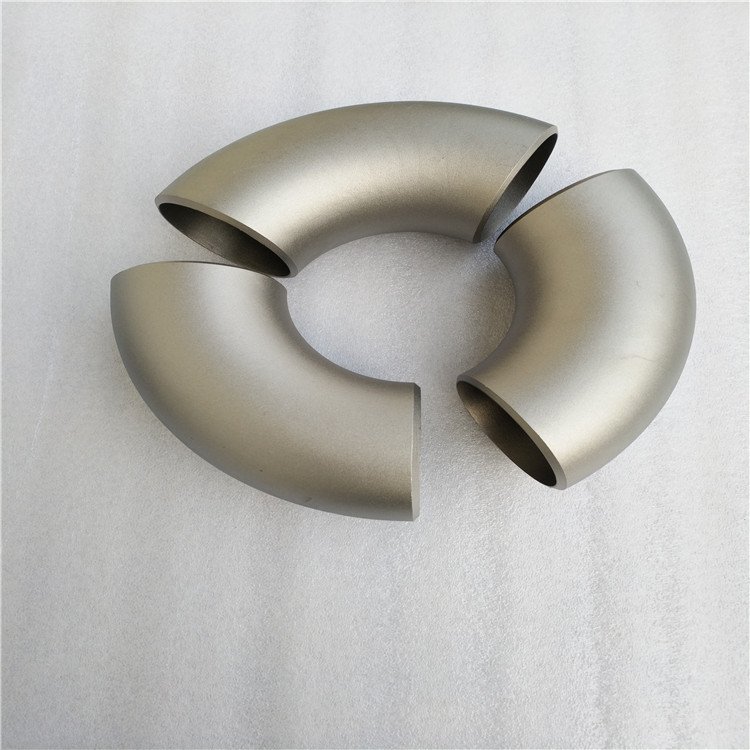
The European standard $\text{EN 10216}$ represents a monumental achievement in harmonized material standardization, specifically codifying the rigorous technical delivery conditions for Seamless Steel Tubes for Pressure Purposes. This standard is the bedrock for material procurement across the global power generation, petrochemical, and industrial gas sectors, ensuring that the piping components used in safety-critical, high-stress environments possess predictable, verifiable, and controlled properties. The comprehensive structure of $\text{EN 10216}$—divided into five distinct parts based on service temperature, stress level, and corrosive exposure—demonstrates a deep, scientifically-informed approach to risk mitigation. A detailed technical analysis reveals that the strength of this standard lies not just in its listing of steel grades, but in the sophisticated metallurgical engineering and stringent quality assurance protocols mandated for each classification, as evidenced by the vast array of specified steel compositions, which range from simple, non-alloy ferritic steels to highly complex, creep-resistant martensitic and corrosion-resistant austenitic alloys.
The Taxonomy of $\text{EN 10216}$: Mapping Performance to Material
The core intellectual contribution of $\text{EN 10216}$ is its hierarchical classification system, where each part is a response to a specific engineering challenge. The material designations, typically starting with ‘P’ (Pressure), are systematically linked to their intended operating conditions, demanding a corresponding change in chemistry and heat treatment.
1. $\text{EN 10216-1}$: The Baseline of Pressure Containment (Specified Room Temperature Properties)
$\text{EN 10216-1}$ addresses the most fundamental requirement: safe pressure containment at or near ambient temperatures. The grades specified here, such as P195TR1/TR2, P235TR1/TR2, and P265TR1/TR2, are non-alloy (carbon) steels. The numerical designation ($\text{195}$, $\text{235}$, $\text{265}$) corresponds to the guaranteed minimum Yield Strength ($\text{R}_{\text{e}}$) in $\text{MPa}$.
The ‘TR’ suffix denotes a technical requirement class, distinguishing between $\text{TR1}$ and $\text{TR2}$ where $\text{TR2}$ imposes stricter requirements. For instance, $\text{TR2}$ mandates:
-
Lower Maximum Sulphur ($\text{S}$) and Phosphorus ($\text{P}$) Content: This improves cleanliness and reduces the risk of hot shortness and lamellar tearing during welding.
-
Mandatory Non-Destructive Testing ($\text{NDT}$): $\text{TR2}$ requires $100\%$ $\text{NDT}$ (Ultrasonic or Electromagnetic) for the detection of longitudinal defects, a critical safety measure for pressure components, which may be optional or less stringent in $\text{TR1}$.
-
Specific Impact Testing: While not primarily a low-temperature grade, $\text{TR2}$ may require $\text{Charpy V-Notch Impact Testing}$ at $0^\circ \text{C}$ for wall thicknesses above $10 \text{ mm}$, demonstrating a baseline of fracture toughness not required for $\text{TR1}$.
These grades are typically used in non-critical piping systems, general fluid conveyance, and pressure vessels where thermal and low-temperature stress is absent. The metallurgical focus is on achieving the minimum specified strength and acceptable ductility via simple normalizing or as-rolled conditions.
2. $\text{EN 10216-2}$: The Crucible of Heat (Specified Elevated Temperature Properties)
$\text{EN 10216-2}$ is the standard’s flagship for the power and petrochemical industries, defining steels optimized for sustained operation at high temperatures where the phenomenon of Creep is the primary design constraint. The grades here are characterized by the ‘GH’ suffix (e.g., P235GH, P265GH, P195GH), signifying guaranteed high-temperature properties.
The key to these grades is the strategic use of alloying elements, most notably Molybdenum ($\text{Mo}$) and Chromium ($\text{Cr}$), particularly visible in the low-alloy steels like 16Mo3 ($\text{1.5415}$), 13CrMo4-5 ($\text{1.7335}$), and 10CrMo9-10 ($\text{1.7380}$).
-
Molybdenum: This element is the primary enhancer of Creep Rupture Strength. It retards the coarsening of the microstructure and enhances the stability of carbides at elevated temperatures, preventing the loss of strength over long service periods.
-
Chromium: $\text{Cr}$ provides crucial Oxidation and Hot Corrosion Resistance, protecting the pipe surface from scaling in high-temperature combustion environments.
For ultra-supercritical (USC) power plants, the standard includes advanced Ferritic-Martensitic Steels such as the $\text{9-12\% Cr}$ steels: X10CrMoVNb9-1 ($\text{1.4903}$, the equivalent of $\text{P91}$), X11CrMoWVNb9-1-1 ($\text{1.4905}$, the equivalent of $\text{P92}$), and X10CrWMoVNb9-2 ($\text{1.4901}$, the equivalent of $\text{P93}$). These require mandatory Quenching and Tempering ($\text{QT}$) to achieve the necessary high-strength, creep-resistant martensitic microstructure. The stringent requirement for these grades is not just the tensile properties at room temperature, but the documented Minimum Creep Rupture Stress after $100,000$ hours at the maximum design temperature, the data for which underpins the standard’s confidence in these materials. The complexity of these advanced grades demands exceptional control over the $\text{Heat-Affected Zone}$ ($\text{HAZ}$) during field welding, often requiring strict pre-heat, post-weld heat treatment ($\text{PWHT}$), and specialized consumables to prevent brittle failure.
3. $\text{EN 10216-3}$: The Toughness and Strength Nexus (Alloy Fine Grain Steels)
$\text{EN 10216-3}$ focuses on Alloy Fine Grain Steels intended for higher strength applications where excellent Fracture Toughness and superior Weldability are required, often used in components operating under high static pressure or within large-scale structural pressure systems. The grades, such as P275N/NH/NL1/NL2 and the high-strength grades P460N/NH/NL1/NL2, are micro-alloyed, typically with $\text{Niobium}$ ($\text{Nb}$), $\text{Vanadium}$ ($\text{V}$), and $\text{Titanium}$ ($\text{Ti}$).
The key features are:
-
Fine Grain Structure: Achieved primarily through Normalizing ($\text{N}$), as indicated by the suffix, or through advanced thermomechanical controlled processing ($\text{TMCP}$). A fine grain size improves both strength (via the $\text{Hall-Petch}$ relationship) and toughness.
-
High Yield Strength: Grades like P460NH or P690Q/QH offer significantly higher strength than the $\text{P235}$ grades, allowing for reduced wall thickness and weight, which is crucial for large-diameter pipelines or structural components of pressure vessels.
-
Toughness Classification: The suffixes ‘N’, ‘NH’, ‘NL1’, and ‘NL2’ are critical:
-
$\text{N}$: Normalized, specified at temperatures down to $-20^\circ \text{C}$.
-
$\text{NH}$: Normalized for high-temperature service (similar to $\text{GH}$ but with fine-grain control).
-
$\text{NL1}$: Normalized/Quenched for low temperature service, often requiring impact test at $-40^\circ \text{C}$.
-
$\text{NL2}$: Normalized/Quenched for lower temperature service, often requiring impact test at $-50^\circ \text{C}$.
-
-
Quenched and Tempered (Q/QH/QL): The $\text{P620Q}$ and $\text{P690Q}$ series are quenched and tempered for maximum strength, demanding the most rigorous $\text{QC}$ and $\text{PWHT}$ during manufacturing and fabrication.
This part of the standard is essential when both high strength and a guaranteed $\text{Ductile-to-Brittle Transition Temperature}$ ($\text{DBTT}$) below $-20^\circ \text{C}$ are required, balancing cost and performance for demanding installations.
4. $\text{EN 10216-4}$: The Cryogenic Defense (Specified Low Temperature Properties)
$\text{EN 10216-4}$ is dedicated to ensuring safe operation in extremely cold conditions, primarily cryogenic and low-temperature processing ($\text{LNG}$, chemical refrigeration). The primary technical focus is suppressing the $\text{DBTT}$ far below ambient temperatures.
The key grades, such as P215NL and P265NL, are non-alloy or low-alloy steels where the $\text{Carbon}$ content is minimized, and Nickel ($\text{Ni}$) content is introduced. $\text{Nickel}$ is the most potent element for enhancing low-temperature toughness by refining the microstructure and suppressing the $\text{DBTT}$. This effect is evident in the inclusion of high-nickel steels: 12Ni14 ($\text{1.5637}$), X12Ni5 ($\text{1.5680}$), and critically, X10Ni9 ($\text{1.5682}$, $9\%$ $\text{Ni}$ steel), which is the standard material for $\text{LNG}$ piping, guaranteed for service down to $-196^\circ \text{C}$ (liquid nitrogen temperature).
The technical mandate here is the Charpy V-Notch Impact Test at the specified low temperature ($\text{-40}^\circ \text{C}$, $\text{-50}^\circ \text{C}$, or $\text{-196}^\circ \text{C}$ for $9\%$ $\text{Ni}$ steels). The standard dictates the required minimum absorbed energy for three samples, providing statistical confidence that the material will fail in a ductile manner at the design temperature, preventing catastrophic brittle fracture. The manufacturing constraint involves strict heat treatment (often normalizing or quenching and tempering) to optimize the $\text{Ni}$-rich microstructure for low-temperature service.
5. $\text{EN 10216-5}$: The Corrosion Barrier (Stainless Steel Tubes)
$\text{EN 10216-5}$ is a complete shift in material science, covering Stainless Steel Tubes where Corrosion Resistance and Hygiene are the main priorities, particularly in chemical processing, food, and pharmaceutical industries. This part contains the largest number of grades, encompassing Austenitic, Ferritic-Austenitic (Duplex), and Martensitic alloys.
-
Austenitic Steels (e.g., X5CrNi18-10, X2CrNiMo17-12-2): These are the workhorse grades ($\text{304}$ and $\text{316}$ equivalents). The addition of $\text{Nickel}$ and $\text{Chromium}$ ensures a face-centered cubic structure, providing excellent corrosion resistance and ductility. The $\text{X2Cr…}$ grades (low $\text{Carbon}$) are preferred for welding thick sections to mitigate Intergranular Corrosion (Weld Decay).
-
Duplex Steels (e.g., X2CrNiMoN22-5-3, X2CrNiMoN25-7-4): These highly advanced alloys offer a balanced microstructure of $\text{Ferrite}$ and $\text{Austenite}$, providing significantly higher strength and superior resistance to Stress Corrosion Cracking and Pitting Corrosion compared to standard austenitic steels. They are critical in highly corrosive environments like offshore oil and gas and specific chemical reactor piping. The inclusion of $\text{Nitrogen}$ ($\text{N}$) enhances strength and corrosion resistance.
-
Stabilized Grades (e.g., X6CrNiTi18-10): Grades alloyed with $\text{Titanium}$ ($\text{Ti}$) or $\text{Niobium}$ ($\text{Nb}$) are used to chemically stabilize the $\text{Carbon}$, preventing the formation of chrome carbides at the grain boundaries during welding, thereby eliminating the risk of intergranular corrosion in applications where $\text{Post-Weld Heat Treatment}$ ($\text{PWHT}$) is not feasible.
The technical requirements for these grades often include specialized corrosion tests (e.g., $\text{ASTM A262}$ for intergranular corrosion) and strict limits on residual elements that could compromise the passive oxide layer essential for their performance.
The Unifying Technical Mandates: Seamlessness, $\text{NDT}$, and Certification
Across all five parts, $\text{EN 10216}$ enforces technical mandates that define the quality and safety of the pressure tubes:
-
Seamless Manufacturing: The requirement for seamless production inherently eliminates the most common failure mode in pressure pipes—the longitudinal weld seam—ensuring homogeneity and isotropy of the pipe wall, essential for uniform stress distribution under high pressure.
-
Hydrostatic Testing: Every single pipe must undergo a Hydrostatic Test at a pressure calculated to produce a stress level up to $70\%$ of the specified yield strength. This direct, full-scale test validates the pipe’s pressure-containment capability and structural soundness.
-
$\text{EN 10204}$ Certification: Compliance is guaranteed by the mandated Inspection Certificates ($\text{3.1}$ or $\text{3.2}$). The $\text{3.1}$ certificate confirms that the chemical and mechanical test results (which must meet $\text{EN 10216}$‘s limits) are derived from the same heat number, while the $\text{3.2}$ certificate requires the results to be verified by an authorized independent third-party inspector, adding an essential layer of assurance for critical applications.
The $\text{EN 10216}$ series is more than a list of numbers and letters; it is a meticulously engineered technical language that allows designers and fabricators to select a pipe whose guaranteed metallurgical behavior precisely matches the demands of a high-pressure, high-temperature, or high-corrosion environment, ensuring the maximum safety and operational lifespan of critical infrastructure. The proliferation of grades within the standard reflects the complex and diverging requirements of modern process engineering, moving away from a one-size-fits-all approach toward specialized material solutions.
You must be logged in to post a comment.