
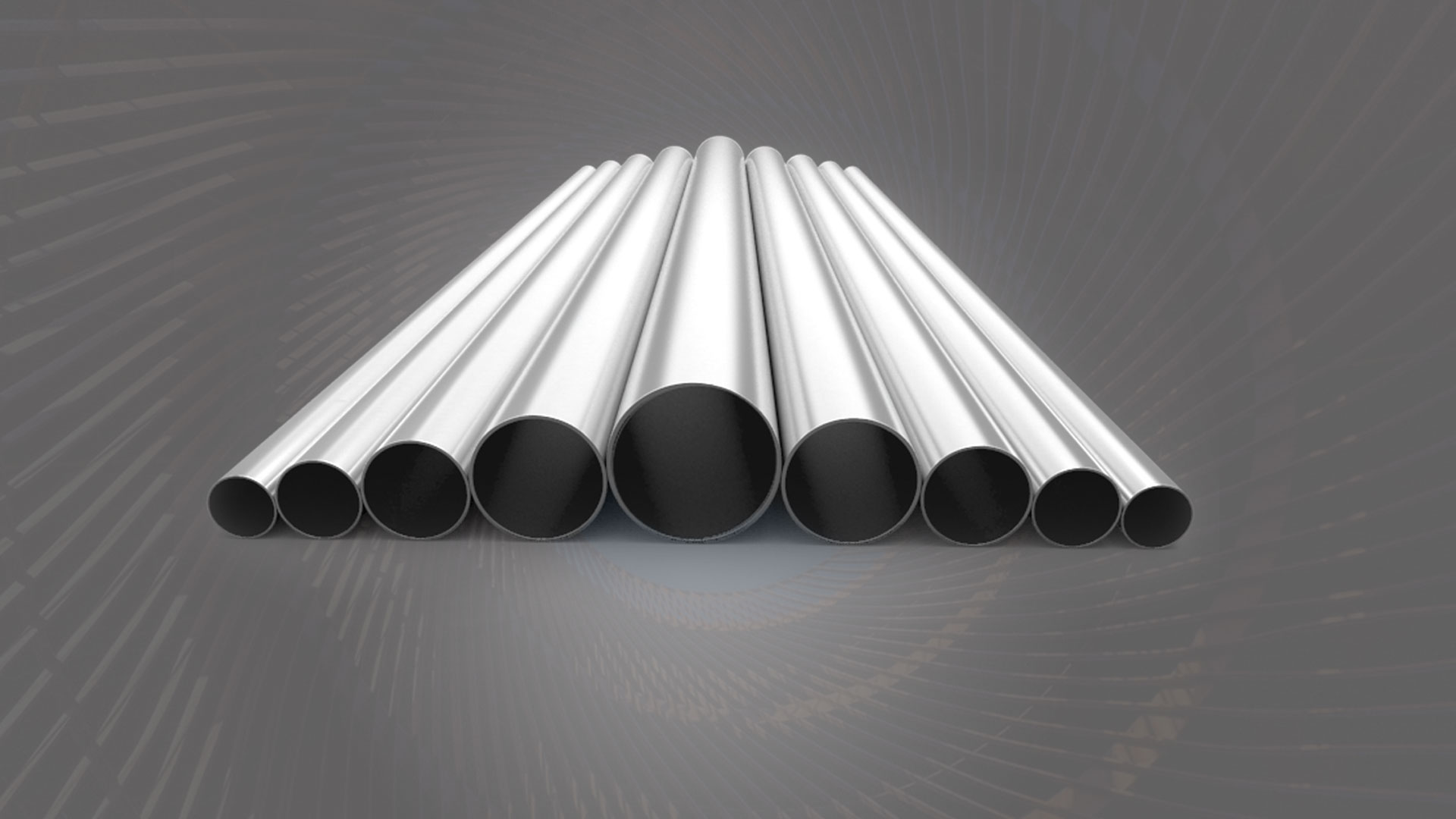
What the Books Don’t Tell You About Steel Pipe: A Field Engineer’s Notes
You ever pick up a piece of pipe and wonder where it came from? I don’t mean the mill. I mean the whole story. The ore in the ground. The blast furnace. The rolling mill. The welder who ran that seam at 2 AM on a Tuesday. The inspector who passed it. The truck driver who hauled it. The ditch it’s lying in now.
I’ve been around pipe for thirty-two years. Started as a laborer on a pipeline crew in West Texas, throwing dope on joints in hundred-degree heat. Worked my way up to inspector, then engineer, then the guy they call when stuff goes wrong. I’ve seen pipe from every angle. Inside, outside, under dirt, underwater, and once, unfortunately, flying through the air after a compressor station let go.
This isn’t a textbook. Textbooks tell you what should happen. I’ll tell you what actually does.
The Naming Problem: DN, OD, ID, and Why Nobody Can Agree
First job out of school, I’m standing in a supply yard in Louisiana. The foreman hands me a list and says “go get me fifty feet of four-inch.” Simple enough, right?
I come back with fifty feet of pipe that measures four inches inside diameter. He looks at me like I’m an idiot. “That’s not four-inch pipe,” he says. “That’s six-inch pipe with thick walls.”
Took me an hour to figure out what he meant. Four-inch pipe doesn’t measure four inches anything. It’s four-inch nominal. Which means something completely different depending on who made it and when.
Table 1: What “Four Inch” Actually Means
| Pipe Type | Nominal Size | Actual OD | Actual ID (Sch 40) | Actual ID (Sch 80) |
|---|---|---|---|---|
| Steel Pipe | 4″ NPS | 4.500″ | 4.026″ | 3.826″ |
| Copper Tube | 4″ Type L | 4.125″ | 4.000″ | N/A |
| PVC Pipe | 4″ Schedule 40 | 4.500″ | 4.154″ | N/A |
| Cast Iron | 4″ Soil Pipe | 4.380″ | 4.000″ | N/A |
| Ductile Iron | 4″ Class 52 | 4.800″ | 4.154″ | N/A |
See what I mean? Four inches is whatever the manufacturer says it is.
Here’s the rule I’ve learned: For steel pipe, always go by OD and wall thickness. Nominal sizes are just shorthand, and shorthand gets people in trouble.
Formula 1: What You Actually Need to Know
ID=OD−(2×t)
Where:
- ID = Inside diameter (mm or inches)
- OD = Outside diameter (mm or inches)
- t = Wall thickness (mm or inches)
Simple, right? You’d be surprised how many people screw this up.
I had a young engineer on a job in Pennsylvania a few years back. He ordered valves based on nominal size. Pipe was 6-inch Schedule 40. Valves showed up with 6-inch flanges. But here’s the thing—Schedule 40 6-inch pipe has an OD of 6.625 inches. The valves were bored for 6-inch pipe, which should have been 6.625. But the manufacturer used 6.000 as the bore diameter. Valves wouldn’t fit. Twenty thousand dollars worth of material, three weeks late, and a very unhappy client.
Always check the OD. Always.
The Two Families: A Tale of Two Pipes
Here’s something they don’t teach in school. Steel pipe comes in two families, and they don’t play nice together.
The Big Family (Ipsco)
This is what most of the world uses. Big OD for a given nominal size. A 12-inch pipe in this family is 323.8mm OD. That’s 12.75 inches for you imperial holdouts.
The Little Family (Metric)
This is what happens when Europeans decide to be logical. A 12-inch pipe here is 300mm OD. That’s 11.8 inches.
Put them together and what do you get? Flanges that don’t line up. Gaskets that don’t seal. Fittings that don’t fit.
Table 2: The Two Families – Common Sizes
| Nominal Size | Big Family OD | Little Family OD | Difference |
|---|---|---|---|
| 2″ (DN50) | 60.3 mm | 57.0 mm | 3.3 mm |
| 4″ (DN100) | 114.3 mm | 108.0 mm | 6.3 mm |
| 6″ (DN150) | 168.3 mm | 159.0 mm | 9.3 mm |
| 8″ (DN200) | 219.1 mm | 219.1 mm | 0 mm * |
| 10″ (DN250) | 273.0 mm | 273.0 mm | 0 mm * |
| 12″ (DN300) | 323.8 mm | 323.9 mm | 0.1 mm |
*Some sizes match. Most don’t. Always check.
I learned this the hard way in Thailand, 2005. We were tying a new processing facility into an existing pipeline. The existing line was European-spec, little family. The new facility was built to American standards, big family. Nobody caught it until we tried to make the connection. The flanges were 6mm apart at the bolt holes.
We spent two weeks and a quarter million dollars on custom adapters. The client wasn’t happy. Neither was I.
The Wall Thickness Game: Why Schedule Matters
You ever wonder why pipe comes in different thicknesses for the same diameter? I’ll tell you. Pressure.
Formula 2: Barlow’s Formula (The Most Important Equation in Piping)
P=2×S×tOD
Where:
- P = Burst pressure (psi)
- S = Material yield strength (psi)
- t = Wall thickness (inches)
- OD = Outside diameter (inches)
This is the equation that keeps pipe from exploding. Double the wall thickness, double the pressure rating. Simple.
But here’s where it gets complicated. Schedule numbers.
Table 3: Common Schedules for 6-Inch Pipe (168.3mm OD)
| Schedule | Wall Thickness | ID | Weight (kg/m) | Pressure Rating (API 5L X42) |
|---|---|---|---|---|
| 10 | 3.40 mm | 161.5 mm | 13.8 | 980 psi |
| 20 | 4.78 mm | 158.7 mm | 19.3 | 1380 psi |
| 30 | 5.54 mm | 157.2 mm | 22.3 | 1600 psi |
| 40 | 7.11 mm | 154.1 mm | 28.3 | 2050 psi |
| 60 | 8.74 mm | 150.8 mm | 34.5 | 2520 psi |
| 80 | 10.97 mm | 146.4 mm | 42.6 | 3170 psi |
| 100 | 13.49 mm | 141.3 mm | 51.5 | 3890 psi |
| 120 | 15.88 mm | 136.5 mm | 59.8 | 4580 psi |
| 140 | 17.48 mm | 133.4 mm | 65.1 | 5040 psi |
| 160 | 19.05 mm | 130.2 mm | 70.2 | 5500 psi |
The schedule number itself? It’s roughly 1000×P/S, where P is working pressure and S is allowable stress. But honestly, nobody uses that. We just know that Schedule 40 is standard, Schedule 80 is heavy, and Schedule 10 is light.
I worked a job in the Gulf of Mexico where someone ordered Schedule 10 for a high-pressure gas line. Thought they were saving weight. Saved weight, all right. Until the pipe split during hydrotest. Lucky nobody was standing nearby.
The Weight Problem: Why You Need to Know How Much Pipe Weighs
You ever tried to lift a 40-foot joint of 24-inch Schedule 60? I have. It weighs about 12,000 pounds. That’s six tons. Your crane needs to know that. Your lifting slings need to know that. Your spreader bar needs to know that.
Formula 3: Pipe Weight Calculation
W=0.02466×t×(OD−t)×L
Where:
- W = Weight (kg)
- t = Wall thickness (mm)
- OD = Outside diameter (mm)
- L = Length (m)
Or for you imperial folks:
W=10.69×t×(OD−t)×L
Where t and OD are in inches, L in feet, W in pounds.
Table 4: Weight Per Foot for Common Sizes (Schedule 40)
| Nominal Size | OD (in) | Wall (in) | Weight (lb/ft) | Weight (kg/m) |
|---|---|---|---|---|
| 1/2″ | 0.840 | 0.109 | 0.85 | 1.27 |
| 3/4″ | 1.050 | 0.113 | 1.13 | 1.68 |
| 1″ | 1.315 | 0.133 | 1.68 | 2.50 |
| 1-1/2″ | 1.900 | 0.145 | 2.72 | 4.05 |
| 2″ | 2.375 | 0.154 | 3.65 | 5.43 |
| 3″ | 3.500 | 0.216 | 7.58 | 11.28 |
| 4″ | 4.500 | 0.237 | 10.79 | 16.05 |
| 6″ | 6.625 | 0.280 | 18.97 | 28.22 |
| 8″ | 8.625 | 0.322 | 28.55 | 42.48 |
| 10″ | 10.750 | 0.365 | 40.48 | 60.21 |
| 12″ | 12.750 | 0.406 | 53.52 | 79.60 |
Here’s a story. North Dakota, 2014, winter. We’re stringing pipe for a 20-inch gas line. The truck shows up with a load of joints. The foreman looks at the shipping papers, looks at the pipe, looks back at the papers. “This doesn’t feel right,” he says.
I do the math in my head. The paper says Schedule 40, 20-inch. That’s 62 pounds per foot. Each joint is 80 feet. That’s 5,000 pounds per joint.
I grab a tape measure. Measure the wall. It’s 0.375 inches. That’s Schedule 30. Weight is 53 pounds per foot. Difference of 9 pounds per foot, 720 pounds per joint.
The mill sent the wrong pipe. Would have been fine for pressure—Schedule 30 still met the spec. But the contractor had already set up their lifting plan based on the heavier weight. Their cranes were rated for 5,000 pounds per pick. With the lighter pipe, they could have picked two joints at once. Double the productivity. But they didn’t know until I checked.
Always check. Never trust the paperwork.
The Marking Mystery: What Those Numbers Actually Mean
You look at a piece of pipe and see a bunch of stamps. What do they mean? Let me decode one for you.
Example: API 5L X52 PSL2 12″ SCH 40 ERW 12345 12-21
- API 5L = American Petroleum Institute specification for line pipe
- X52 = Minimum yield strength 52,000 psi
- PSL2 = Product Specification Level 2 (tighter tolerances, more testing)
- 12″ = Nominal size (but remember, that’s 12.75″ OD)
- SCH 40 = Wall thickness (0.406″ for 12-inch)
- ERW = Electric Resistance Welded (how it’s made)
- 12345 = Heat number (for traceability)
- 12-21 = December 2021 (manufacturing date)
Table 5: Common Pipe Specifications
| Spec | Full Name | Typical Use | My Experience |
|---|---|---|---|
| API 5L | Line Pipe | Oil & gas transmission | Most common, reliable |
| ASTM A53 | Steel Pipe, Black/Hot-Dipped | Low-pressure, structural | Good for water, air |
| ASTM A106 | Seamless Carbon Steel | High-temp service | Power plants, refineries |
| ASTM A312 | Stainless Steel | Corrosive service | Chemical plants |
| ASTM A333 | Low-Temp Service | Cold weather | Arctic pipelines |
| ASTM A335 | Alloy Steel | High-temp, high-pressure | Power generation |
I had a job in Alberta where the client specified A106 for a low-temperature application. Minus forty design. A106 is fine at room temperature. At minus forty, it’s brittle as glass. Should have been A333. The pipe hadn’t been installed yet—caught it in the yard. Saved them a catastrophic failure.
Know your specs. Know your temperatures. Know your pressures.
The Connection Problem: How Pipe Joins
Pipe by itself is just a long tube. Useless until you connect it to something. Here’s how that happens.
Threaded Connections
Small pipe, low pressure, not too critical. 2-inch and under, mostly. You cut threads on the end, screw on a fitting, maybe add some dope or tape.
Formula 4: Thread Engagement
L2=0.8×D
Rough rule: engagement length should be about 80% of diameter. For 2-inch pipe, that’s about 1.6 inches of thread engagement.
I saw a threaded connection fail in a water system in Florida. Someone didn’t engage enough threads. Just a few turns. When they pressured up, the fitting blew off. Took out a control panel. Cost fifty grand in damage.
Welded Connections
This is where most of my career has been. You weld pipe together. Sounds simple. It’s not.
Table 6: Common Weld Types for Pipe
| Weld Type | Wall Thickness | Position | Inspection Method | My Preference |
|---|---|---|---|---|
| Butt Weld | Any | All | RT, UT | Best for high pressure |
| Socket Weld | < 2″ | All | VT, MT | Good for small bore |
| Fillet Weld | Any | All | VT, MT, PT | Fittings, attachments |
| ERW | Thin wall | Mill seam | UT, Eddy Current | Line pipe |
The key with welding is fit-up. If your pipe ends don’t line up, your weld will fail. I don’t care how good the welder is.
Formula 5: Allowable Misalignment
Mmax=0.1×t or 1/16″, whichever is smaller
For 0.5-inch wall, that’s 0.05 inches. About the thickness of a credit card.
I watched a welder in Texas try to weld 24-inch pipe with 3/16-inch misalignment. His argument: “I’ll just fill it with weld metal.” No. That’s a stress riser. That’s a crack waiting to happen. That’s a failure in five years instead of fifty.
We cut it out and did it over. He wasn’t happy. But the pipe didn’t fail.
Flanged Connections
Big pipe, high pressure, or when you need to take things apart. You weld a flange on each end, bolt them together with a gasket in between.
Table 7: Flange Pressure Ratings
| Class | Pressure Rating @ 100°F | @ 500°F | @ 800°F | Common Use |
|---|---|---|---|---|
| 150 | 285 psi | 230 psi | 140 psi | Low pressure |
| 300 | 740 psi | 665 psi | 410 psi | Medium pressure |
| 600 | 1480 psi | 1330 psi | 820 psi | High pressure |
| 900 | 2220 psi | 1995 psi | 1230 psi | Very high |
| 1500 | 3705 psi | 3330 psi | 2050 psi | Extreme |
| 2500 | 6170 psi | 5550 psi | 3415 psi | Don’t touch |
Here’s the thing about flanges: the gasket matters more than anything. Wrong gasket material? Leak. Wrong bolt torque? Leak. Dirt on the sealing surface? Leak.
I spent three days on an offshore platform in the North Sea chasing a flange leak. Replaced the gasket twice. Checked the bolts. Checked the alignment. Still leaked.
Finally, I ran my finger along the flange face. Felt a tiny scratch. Maybe 0.002 inches deep. But across the whole sealing surface, it was enough. We lapped the flange, new gasket, torqued to spec. No leak.
The devil’s in the details.
The Failure Modes: How Pipe Dies
Pipe doesn’t last forever. Here’s how it goes.
Corrosion
This is the big one. Rust. Eats pipe from the inside out, outside in, or both.
Formula 6: Corrosion Allowance
trequired=tpressure+tcorrosion
Standard practice: add 1/16 inch (1.6mm) for corrosion. More if the fluid is nasty.
I inspected a gas line in West Texas that had been in service forty years. Original wall was 0.250 inches. We measured it at 0.185. Lost 65 thousandths to corrosion. That’s 0.0016 inches per year. Right on schedule.
But here’s the scary one. A line in the Gulf of Mexico, sour service, 5% H2S. Wall loss was 0.010 inches per year. Five times faster than predicted. Why? Bacteria. Sulfate-reducing bacteria in the water made the corrosion worse. Nobody modeled that.
Fatigue
Pipe bends, stress cycles, cracks grow. Eventually, it fails.
Formula 7: Fatigue Life (Simplified)
N=C×(Δσ)−m
Where N is cycles to failure, Δσ is stress range, C and m are material constants.
For steel pipe, m is about 3. Double the stress range, and fatigue life drops by a factor of 8.
I saw this on a compressor station in Pennsylvania. The pipe was vibrating. Small vibrations, maybe 0.1 inch amplitude. But 60 times per second. That’s 5 million cycles per day. After six months, cracks appeared. After eight months, a leak.
We fixed it by adding supports. Changed the natural frequency. Stopped the vibration. But the crack was already there.
Mechanical Damage
Someone hits the pipe with an excavator. A rock falls on it. A truck runs over it. Dents, gouges, scrapes.
Formula 8: Dent Severity
Dent%=DepthDiameter×100
If dent depth > 2% of diameter, you have a problem. For 30-inch pipe, that’s 0.6 inches. Anything deeper than that, you need to investigate.
I investigated a dent in a 36-inch gas line in Ohio. Someone had dropped a tree on it during construction. Dent was 1.2 inches deep. 3.3% of diameter. The analysis said it was safe at operating pressure. But five years later, a crack started at the dent edge. We caught it on an ILI run before it failed.
Sometimes “safe” isn’t safe forever.
The New Stuff: Where We’re Headed
High-Strength Steels
X70, X80, even X100 now. Stronger steel means thinner walls, lighter pipe, cheaper installation.
Table 8: Steel Grades Comparison
| Grade | Yield Strength (min) | Tensile Strength | Common Use | Weldability |
|---|---|---|---|---|
| X42 | 42,000 psi | 60,000 psi | Old pipelines | Easy |
| X52 | 52,000 psi | 66,000 psi | Standard | Good |
| X60 | 60,000 psi | 75,000 psi | Higher pressure | Good |
| X65 | 65,000 psi | 77,000 psi | Offshore | Careful |
| X70 | 70,000 psi | 82,000 psi | Long distance | Pre-heat needed |
| X80 | 80,000 psi | 90,000 psi | Arctic | Difficult |
But here’s the catch: stronger steel is harder to weld. More pre-heat. More post-weld heat treatment. More careful procedures.
I watched a contractor try to weld X80 with X52 procedures. Cold cracks everywhere. Had to cut out a dozen joints. Cost them a million dollars.
Coatings
Old days: coal tar enamel. Messy, toxic, but it worked.
Now: three-layer polyethylene, fusion-bonded epoxy, polyurethane.
Table 9: Coating Types
| Coating | Max Temp | Application | My Experience |
|---|---|---|---|
| FBE | 80°C | Plant-applied | Good, but fragile |
| 3LPE | 60°C | Plant-applied | Tough, field proven |
| Coal Tar | 50°C | Field-applied | Old school, messy |
| Concrete | N/A | Weight coating | Offshore only |
| Tape | 40°C | Field repair | Temporary only |
I inspected a line in the desert where the FBE coating failed after five years. UV exposure. The sun cooked it. Spec said it was good for twenty. It wasn’t.
Inspection
Smart pigs. EMAT. Ultrasonic. Magnetic flux leakage. We can see inside pipe better than ever.
But here’s the thing: inspection finds problems. It doesn’t fix them. And every problem you find costs money to fix. Some operators stop looking because they don’t want to find anything.
That’s how failures happen.
What I’ve Learned
After thirty years, here’s what I know about pipe:
It’s just a tube. But it’s a tube under pressure, full of stuff that can kill you, buried in the ground where you can’t see it.
Respect the numbers. Check everything. Trust but verify.
The pipe doesn’t care about your schedule or your budget. It cares about stress and corrosion and fatigue. It cares about physics.
And physics always wins.
I’ve seen pipe fail from a scratch you could barely see. I’ve seen pipe last a hundred years in the worst conditions. I’ve seen good decisions and bad ones. I’ve made both.
The difference between a good engineer and a bad one isn’t knowing the formulas. It’s knowing when to trust them and when to question them.
That line in West Texas I mentioned? The one with 65 thousandths of corrosion? It’s still running. We did the math, added a safety factor, and decided it had another ten years.
Maybe it does. Maybe it doesn’t. We’ll find out.
That’s the thing about pipe. It keeps you guessing.
You must be logged in to post a comment.