
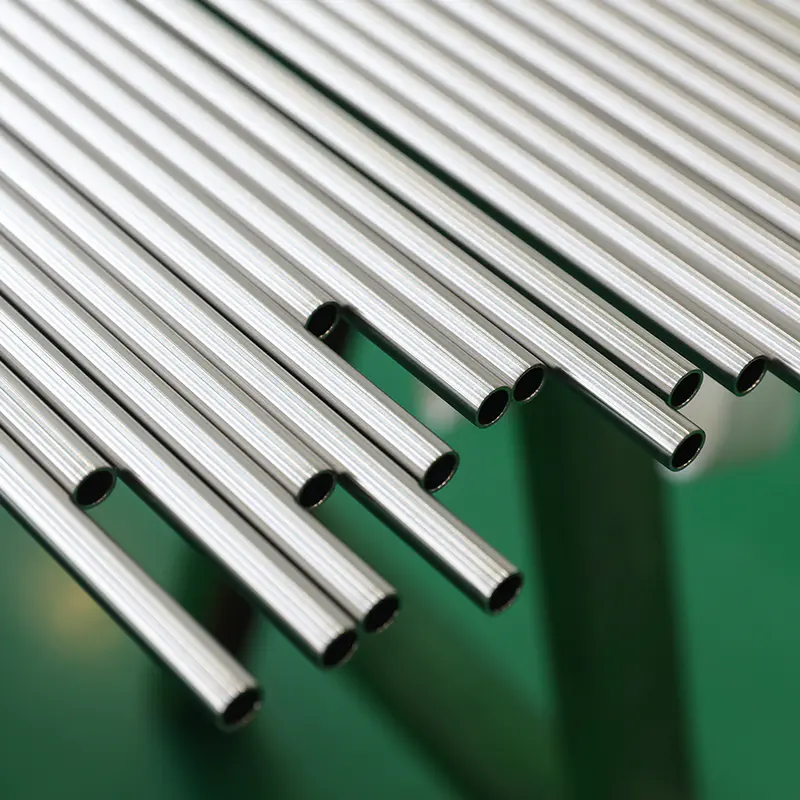
ASTM B677 Alloy 926 super-austenitic Stainless steel Seamless Pipe
Super-Austenitic 6Mo Series
ASTM B677 Alloy 926 Seamless Pipe Specifications
Comprehensive Technical Datasheet for UNS N08926 / W.Nr. 1.4529 Super-Austenitic Stainless Steel Pipes. Engineered for extreme chloride pitting, crevice corrosion, and stress corrosion cracking resistance in aggressive industrial environments.
UNS N08926
W.Nr. 1.4529
Incoloy 25-6MO
General Overview & Material Profile
ASTM B677 Alloy 926 Seamless Pipe (UNS N08926 / W.Nr. 1.4529 / EN X1NiCrMoCuN25-20-7) is a super-austenitic 6% molybdenum stainless steel engineered specifically to withstand exceptionally aggressive media that cause premature failure in standard 304/304L, 316/316L, and duplex 2205 grades. Commercially recognized under trade designations such as Incoloy 25-6MO, Kronos 1728, and Alloy 1.4529, this material provides outstanding performance in media dominated by concentrated chlorides, dilute and intermediate-strength sulfuric acid, wet-process phosphoric acid, organic acids, and aggressive marine environments.
The super-austenitic structure is stabilized by elevated concentrations of nickel (24.0% – 26.0%), chromium (19.0% – 21.0%), molybdenum (6.0% – 7.0%), nitrogen (0.15% – 0.25%), and copper (0.50% – 1.50%). Nitrogen enrichment plays a pivotal role in boosting the material’s mechanical yield strength—allowing engineers to design lighter-walled piping systems without compromising structural integrity—while simultaneously raising the critical pitting temperature (CPT) and preventing the formation of undesirable intermetallic phase precipitates during thermal processing and field welding.
Standard Specifications & Supply Scope
The primary structural, manufacturing, and supply parameters for ASTM B677 UNS N08926 seamless pipes manufactured and stocked across our modern extrusion and cold-drawing facilities include:
| Technical Parameter | ASTM B677 Specification / Standard Values |
|---|---|
| ASTM/ASME Standard Specification | ASTM B677 / ASME SB677 (Standard Specification for UNS N08904, UNS N08925, UNS N08926 Seamless Pipe and Tube) |
| UNS & EN Designation | UNS N08926 | W.Nr. 1.4529 | EN X1NiCrMoCuN25-20-7 | Incoloy 25-6MO |
| Outer Diameter (OD) Scope | 6.0 mm to 457.2 mm (1/8 inch NPS up to 18 inch NPS seamless) |
| Wall Thickness Scope | 1.0 mm to 65.0 mm (Schedule 5S through Schedule XXS) |
| Pipe Length Options | Single Random Length (SRL 5-7m), Double Random Length (DRL 10-12m), Cut-to-length up to 18 meters |
| Manufacturing Process Method | Cold Drawn (CD), Cold Rolled (CR), Pilgered, Hot Extruded + Solution Annealed & Pickled (Bright Annealed available upon request) |
| End Condition | Plain End (PE), Beveled End (BE to ANSI B16.25), Threaded Ends (Male/Female), Victaulic Groove |
| Delivery Condition | Solution Annealed, Descaled/Pickled, Passivated, Mechanically Polished (180 Grit, 320 Grit, 400 Grit, 600 Grit) |
International Equivalent Standards & Grade Classifications
To streamline cross-border procurement and support international engineering procurement construction (EPC) projects, ASTM B677 Alloy 926 is recognized under various regional codifications:
| Standard Organization | Standard Code / Spec | Designation / Grade Name | UNS / Werkstoff Nr. |
|---|---|---|---|
| ASTM (USA) | ASTM B677 / ASTM B673 / ASTM B674 | Alloy 926 / Super Austenitic 6Mo | UNS N08926 |
| ASME (USA) | ASME SB677 Boiler & Pressure Vessel Code | SB677 Seamless Pipe | UNS N08926 |
| EN / DIN (Europe) | EN 10216-5 / DIN 17456 / DIN 17458 | X1NiCrMoCuN25-20-7 | W.Nr. 1.4529 |
| ISO | ISO 13680 / ISO 15156 (NACE MR0175) | NC25207 | UNS N08926 |
| Trade Names | Commercial Trademarks | Incoloy 25-6MO / Cronifer 1925 hMo | Alloy 926 |
Chemical Composition Analysis (wt%)
The performance of ASTM B677 UNS N08926 stems from its tightly balanced alloying chemistry. The combination of high Mo, Cr, Ni, and N ensures maximum corrosion resistance without severe phase embrittlement.
| Element | Nickel (Ni) | Chromium (Cr) | Molybdenum (Mo) | Nitrogen (N) | Copper (Cu) | Carbon (C) | Manganese (Mn) | Silicon (Si) | Phosphorus (P) | Sulfur (S) | Iron (Fe) |
|---|---|---|---|---|---|---|---|---|---|---|---|
| ASTM B677 Specification | 24.0 – 26.0 | 19.0 – 21.0 | 6.0 – 7.0 | 0.15 – 0.25 | 0.50 – 1.50 | ≤ 0.020 | ≤ 1.00 | ≤ 0.50 | ≤ 0.030 | ≤ 0.010 | Balance (~36-48) |
| EN 1.4529 Specification | 24.0 – 26.0 | 19.0 – 21.0 | 6.0 – 7.0 | 0.15 – 0.25 | 0.50 – 1.50 | ≤ 0.020 | ≤ 1.00 | ≤ 0.50 | ≤ 0.030 | ≤ 0.010 | Balance |
The Metallurgical Role of Nitrogen & Molybdenum:
The addition of 0.15–0.25% Nitrogen (N) is crucial in Alloy 926. Nitrogen stabilizes the austenitic crystal matrix, increases interstitial solid-solution strengthening without decreasing ductility, and dramatically shifts the precipitation kinetics of intermetallic phases (such as sigma phase $\sigma$ or chi phase $\chi$) to longer times during heat treatment and welding.
Mechanical Performance & Strength Parameters
Values are measured in the solution-annealed state at room temperature (20°C / 68°F) in compliance with ASTM A370 and ASTM E8 testing standards.
| Mechanical Test Parameter | ASTM B677 Requirement | EN 10216-5 (1.4529) Requirement | Typical Production Value |
|---|---|---|---|
| Tensile Strength, $R_m$ | ≥ 650 MPa (94.3 ksi) | 650 – 850 MPa | 710 – 780 MPa |
| Yield Strength, $R_{p0.2}$ (0.2% Offset) | ≥ 295 MPa (42.8 ksi) | ≥ 300 MPa | 340 – 390 MPa |
| Yield Strength, $R_{p1.0}$ (1.0% Offset) | N/A | ≥ 330 MPa | 370 – 420 MPa |
| Elongation at Break ($A_5$) | ≥ 35 % | ≥ 40 % | 45 – 55 % |
| Brinell Hardness (HBW) | ≤ 250 HBW | ≤ 250 HBW | 180 – 210 HBW |
| Rockwell B Hardness (HRB) | ≤ 100 HRB | ≤ 100 HRB | 88 – 93 HRB |
| Charpy-V Impact Energy (-196°C Cryogenic) | Optional per project | ≥ 80 J (Longitudinal) | > 120 J |
Physical & Thermophysical Properties
| Physical Property | Temperature (°C) | Metric Value | Imperial Value |
|---|---|---|---|
| Modulus of Elasticity ($E$) | 20°C | 195 GPa | 28.3 × 10⁶ psi |
| Thermal Conductivity ($\lambda$) | 20°C / 100°C / 500°C | 12.0 / 14.0 / 21.0 W/(m·K) | 6.9 / 8.1 / 12.1 Btu/(ft·h·°F) |
| Specific Heat Capacity ($c_p$) | 20°C | 450 J/(kg·K) | 0.107 Btu/(lb·°F) |
| Mean Thermal Expansion ($\alpha$) | 20°C – 100°C / 20°C – 400°C | 15.5 × 10⁻⁶ K⁻¹ / 16.5 × 10⁻⁶ K⁻¹ | 8.6 × 10⁻⁶ in/in/°F |
| Electrical Resistivity ($\rho$) | 20°C | 0.85 Ω·mm²/m | 33.5 microhm-in |
| Magnetic Permeability ($\mu$) | 20°C (Annealed State) | 1.002 (Essentially Non-Magnetic) | 1.002 |
Corrosion Resistance Profile & PREN Dynamics
Pitting Resistance Equivalent Number (PREN) provides a quantitative benchmark for comparing an alloy’s localized corrosion resistance in halide-containing solutions. For nitrogen-bearing super-austenitic steels, PREN is calculated via the standard formula:
For ASTM B677 Alloy 926, the nominal composition (20% Cr, 6.5% Mo, 0.20% N) yields a PREN range between 43 and 47 (average ~46), which is drastically higher than standard 316L (PREN ~25), 2205 Duplex (PREN ~35), and standard 904L (PREN ~36).
Chloride Pitting & Crevice Resistance
Exhibits Critical Pitting Temperature (CPT) exceeding 65°C (149°F) and Critical Crevice Temperature (CCT) per ASTM G48 Method B well above 35°C in ferric chloride tests, rendering it virtually immune to marine bio-fouling and stagnant seawater attack.
Stress Corrosion Cracking (SCC)
With 24-26% Nickel content, Alloy 926 surpasses the critical threshold needed to prevent chloride-induced stress corrosion cracking in boiling magnesium chloride (ASTM G36 testing) up to temperatures of 150°C (302°F).
Sulfuric & Phosphoric Acid Service
The intentional addition of 0.5–1.5% copper imparts superior passivation in reducing media, showing extremely low corrosion rates (<0.1 mm/year) in dilute to medium concentrations of sulfuric acid ($H_2SO_4$) and wet-process phosphoric acid ($H_3PO_4$).
Corrosion Performance Comparison (Alloy 926 vs. Alternative Alloys)
| Alloy Grade | UNS Number | Cr (%) | Ni (%) | Mo (%) | N (%) | PREN Value | Critical Pitting Temp (°C) |
|---|---|---|---|---|---|---|---|
| 316L Stainless Steel | S31603 | 17.0 | 11.0 | 2.1 | – | 24.0 | 15°C |
| 904L Austenitic | N08904 | 20.0 | 25.0 | 4.5 | – | 35.0 | 45°C |
| 2205 Duplex | S31803 / S32205 | 22.0 | 5.5 | 3.1 | 0.17 | 35.0 | 35°C |
| Alloy 926 (ASTM B677) | N08926 | 20.0 | 25.0 | 6.5 | 0.20 | 46.0 | > 68°C |
| 254 SMO / 6Mo | S31254 | 20.0 | 18.0 | 6.1 | 0.20 | 43.0 | 65°C |
| Nickel Alloy 625 | N06625 | 21.5 | 60.0 | 9.0 | – | 51.0 | > 85°C |
Manufacturing Workflow & Quality Control Steps
The production of ASTM B677 UNS N08926 seamless pipes follows a rigorous metallurgy route designed to prevent phase segregation and yield precise dimensional accuracy:
Smelting & Refining
Vacuum Induction Melting (VIM) followed by Electroslag Remelting (ESR) guarantees ultraclean chemistry, ultra-low sulfur levels, and minimal inclusion density.
Hot Extrusion / Piercing
Ingots are heated to 1150°C–1200°C and hot-extruded or rotary pierced to form uniform, seamless tube hollows with precise central concentricity.
Cold Drawing & Pilgering
Multiple cold-drawing and cold-pilgering passes reduce wall thickness and outer diameter, achieving fine dimensional tolerances and smooth interior surfaces.
Solution Annealing
Pipes are solution annealed at 1150°C–1200°C followed by immediate water quenching to redissolve precipitated intermetallic phases back into the matrix.
Thermal Metallurgy
Solution Annealing Guidelines for UNS N08926
Because of its high molybdenum content (6.0–7.0%), Alloy 926 is susceptible to the precipitation of brittle sigma ($\sigma$), chi ($\chi$), and Laves intermetallic phases if held in the temperature range of 600°C to 1000°C. Proper heat treatment is vital to restore full corrosion resistance.
Annealing Temperature
Solution heat treatment must be conducted between 1150°C and 1200°C (2100°F – 2190°F). Under no circumstances should temperatures fall below 1140°C during solution treatment.
Cooling / Quenching Method
Rapid cooling is critical. Water quenching or forced air cooling to below 400°C must be executed in the shortest time frame possible to freeze the homogeneous single-phase austenitic structure.
Scale Removal & Pickling
Following thermal treatment, surface oxides are removed via acid pickling in a bath of $HNO_3 + HF$ (Nitric-Hydrofluoric Acid) or through bright annealing under a pure hydrogen atmosphere.
Fabrication, Welding & Machining Specifications
Although UNS N08926 features high work-hardening rates typical of super-austenitic steels, it can be readily welded and machined using industry-standard shop techniques.
| Operation | Recommended Practice / Specification | Consumables & Tooling Recommendations |
|---|---|---|
| Welding Processes | GTAW (TIG), GMAW (MIG), SMAW (Stick), and Submerged Arc Welding (SAW) | Use overmatched nickel-alloy filler metals such as ERNiCrMo-3 (Alloy 625) or ERNiCrMo-13 (Alloy 59) to prevent Mo micro-segregation in weld metal. |
| Preheating & Interpass Temp | No preheating required; maintain strict heat input control | Maximum interpass temperature must be limited to 100°C (212°F) to avoid hot cracking and harmful intermetallic formation. |
| Machining Characteristics | High work-hardening rate requires heavy-duty machine tools | Use sharp tungsten carbide tools (ISO grade C2/C3), high feed rates, slow cutting speeds, and copious amounts of chlorinated or sulfurized cutting fluids. |
| Cold Forming / Bending | Excellent ductility permits cold bending, flanging, and expansion | Due to higher initial yield strength than 316L, higher springback allowance and greater forming forces are required. Re-annealing recommended if cold deformation exceeds 15%. |
Dimensional Tolerances for Seamless Pipes (ASTM B677 / ASTM A1016)
| Specified Outside Diameter (OD, mm) | OD Tolerance Over/Under (mm) | Wall Thickness Tolerance (%) | Cut Length Tolerance (mm) | Straightness Tolerance |
|---|---|---|---|---|
| OD < 12.7 mm | ± 0.13 mm | ± 10 % | + 3.0 mm / – 0 mm | 1.5 mm / 1.0 m |
| 12.7 mm ≤ OD < 38.1 mm | ± 0.19 mm | ± 10 % | + 4.8 mm / – 0 mm | 1.5 mm / 1.0 m |
| 38.1 mm ≤ OD < 88.9 mm | ± 0.25 mm | ± 10 % | + 4.8 mm / – 0 mm | 1.5 mm / 1.0 m |
| 88.9 mm ≤ OD < 219.1 mm | ± 0.38 mm | ± 12.5 % | + 6.4 mm / – 0 mm | 2.0 mm / 1.0 m |
| 219.1 mm ≤ OD ≤ 457.2 mm | ± 0.75 % of OD | ± 12.5 % | + 6.4 mm / – 0 mm | 2.0 mm / 1.0 m |
Standard Pipe Schedules & Weight Matrix (ASME B36.19)
Theoretical weights calculated for ASTM B677 Alloy 926 (Density: 8.10 g/cm³) in accordance with ASME B36.19M dimensions:
| NPS (Inches) | DN (mm) | OD (mm) | SCH 10S WT (mm) | SCH 10S Weight (kg/m) | SCH 40S WT (mm) | SCH 40S Weight (kg/m) | SCH 80S WT (mm) | SCH 80S Weight (kg/m) |
|---|---|---|---|---|---|---|---|---|
| 1/2″ | DN15 | 21.34 | 2.11 | 1.02 | 2.77 | 1.29 | 3.73 | 1.65 |
| 3/4″ | DN20 | 26.67 | 2.11 | 1.30 | 2.87 | 1.71 | 3.91 | 2.23 |
| 1″ | DN25 | 33.40 | 2.77 | 2.13 | 3.38 | 2.55 | 4.55 | 3.29 |
| 1-1/2″ | DN40 | 48.26 | 2.77 | 3.16 | 3.68 | 4.11 | 5.08 | 5.50 |
| 2″ | DN50 | 60.33 | 2.77 | 4.00 | 3.91 | 5.53 | 5.54 | 7.61 |
| 3″ | DN80 | 88.90 | 3.05 | 6.57 | 5.49 | 11.48 | 7.62 | 15.53 |
| 4″ | DN100 | 114.30 | 3.05 | 8.51 | 6.02 | 16.34 | 8.56 | 22.70 |
| 6″ | DN150 | 168.28 | 3.40 | 14.06 | 7.11 | 28.74 | 10.97 | 43.27 |
| 8″ | DN200 | 219.08 | 3.76 | 20.31 | 8.18 | 43.26 | 12.70 | 65.73 |
Key Industry Applications & Service Sectors
Offshore Oil & Gas Topsides
Used for firewater systems, seawater cooling lines, produced water treatment facilities, and umbilical piping on offshore platforms where marine atmospheric exposure combined with high chloride fluids destroys standard stainless steels.
Flue Gas Desulfurization (FGD)
Serves in coal-fired power station scrubber systems, absorber towers, slurry piping, and reheaters handling wet acidic scrub solutions containing high concentrations of chlorides and fluorides at elevated temperatures.
Desalination Plants (RO & MSF)
Ideal for high-pressure piping manifolds, seawater intake lines, and brine concentrate discharge systems in Reverse Osmosis (SWRO) and Multi-Stage Flash (MSF) desalination installations.
Chemical Processing Plants
Crucial for transfer piping handling chlorinated hydrocarbons, phosphoric acid production, organic acid reactors, and heat exchangers cooled by brackish or ocean water.
Pulp & Paper Bleaching Plants
Selected for chlorine dioxide ($ClO_2$) bleaching stages, washer vats, and liquor piping where aggressive oxidizing bleaches cause rapid pitting in 316L and 317L grades.
Nuclear & Power Generation
Extensively used in condenser tubes, component cooling water (CCW) heat exchangers, and service water piping utilizing natural river or seawater cooling sources.
Testing, Inspection & Certification Protocol
Every length of ASTM B677 UNS N08926 pipe undergoes rigorous non-destructive and destructive evaluation to confirm compliance with global pressure vessel codes (ASME Section VIII, PED 2014/68/EU).
| Testing Classification | Standard Test Method | Acceptance Criteria / Scope |
|---|---|---|
| Hydrostatic Testing | ASTM A1016 / ASTM B677 | 100% of pipes tested at calculated pressure $P = 2St/D$ up to a max of 20.7 MPa (3000 psi) held for minimum 5 seconds. |
| Eddy Current Testing (ET) | ASTM E426 / EN 10246-2 | 100% inline non-destructive electromagnetic inspection for longitudinal surface defects and wall discontinuities. |
| Ultrasonic Testing (UT) | ASTM E213 / ISO 10893-10 | Full peripheral angle beam ultrasonic inspection for internal flaws, laminations, and wall thickness verification. |
| Intergranular Corrosion Test | ASTM A262 Practice C / ISO 3651-2 | Huey test in boiling 65% Nitric Acid or Strauss test to confirm absence of intergranular carbide/intermetallic attack. |
| Pitting Corrosion Testing | ASTM G48 Method A & B | Ferric chloride pitting corrosion test conducted at specified temperature (e.g., 50°C for 24h) confirming weight loss < 0.1 g/m². |
| Positive Material Identification | XRF / OES PMI Inspection | 100% PMI verification of finished pipes prior to packaging to ensure zero mix-ups in alloying elements (Ni, Cr, Mo, Cu). |
| Material Test Certificate (MTC) | EN 10204 Type 3.1 / Type 3.2 | Fully certified chemical, mechanical, heat treatment, and NDT test reports with complete heat traceability to raw mill ingot. |
Packaging, Marking & Global Logistics
To preserve the high-precision surface finish and prevent contamination during ocean freight and overland transportation, all ASTM B677 Alloy 926 seamless pipes are packaged according to strict export logistics protocols:
- Pipe End Protection: Plastic end caps fitted on both ends to guard bevels and internal surfaces against moisture, dust, and physical damage.
- Surface Preservation: Option for light oil coating, plastic wrapping, or wooden crate packing (IPPC ISPM 15 certified fumigated crates for overseas shipping).
- Standard Stenciling & Marking: Continuous ink jet marking along the length of each pipe stating: Manufacturer Name, Grade (ASTM B677 UNS N08926 / W.Nr. 1.4529), Outer Diameter × Wall Thickness, Heat Number, Pipe Schedule, and MTC Lot Number.
- Bundling: Hexagonal bundles bound with heavy-duty steel strapping and nylon sling straps for safe overhead crane handling.
Frequently Asked Technical Questions
Q1: What is the main difference between Alloy 926 (UNS N08926) and 254 SMO (UNS S31254)?
While both belong to the 6% Molybdenum super-austenitic family with PREN ≥ 42, Alloy 926 features a higher Nickel content (24–26% Ni compared to 17.5–19.5% in 254 SMO). The elevated nickel level gives Alloy 926 substantially superior resistance to chloride stress corrosion cracking (SCC) and enhanced structural stability against sigma phase precipitation during welding heavy wall sections.
Q2: Can ASTM B677 Alloy 926 seamless pipes be used in NACE MR0175 / ISO 15156 sour gas environments?
Yes, UNS N08926 is listed in NACE MR0175 / ISO 15156-3 as suitable for sour oilfield service (containing $H_2S$) in solution-annealed conditions, provided operating parameters (partial pressure of $H_2S$, in-situ temperature, and chloride level) remain within code limits.
Q3: Why choose seamless pipes over welded pipes (ASTM B673/B674) in 6Mo alloys?
ASTM B677 Seamless pipes eliminate the heat-affected zone (HAZ) weld seam entirely, avoiding potential micro-segregation of molybdenum in weld metal. This makes seamless pipes preferable for ultra-high pressure applications, cyclic thermal loads, and highly corrosive media where micro-segregation might initiate localized crevice attack.
Need ASTM B677 Alloy 926 Pipes for Your Next Project?
We maintain an extensive inventory of UNS N08926 / W.Nr. 1.4529 seamless pipes in standard NPS sizes from 1/2″ to 12″ SCH 10S/40S/80S ready for immediate dispatch. Custom dimensions manufactured within 15–30 days.
You must be logged in to post a comment.